
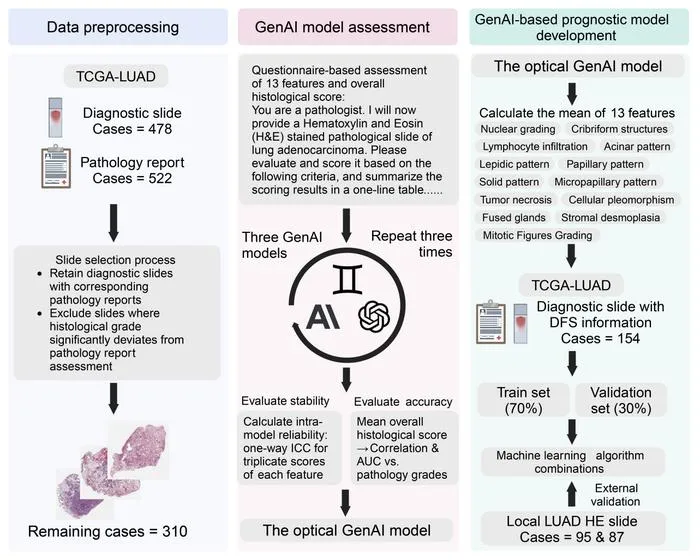
GenAI models demonstrate high accuracy and consistency in pathological grading and risk assessment for lung adenocarcinoma.
Key Details
- 1Study tested GPT-4o, Claude-3.5-Sonnet, and Gemini-1.5-Pro on 492 digitized slides from public and independent sources.
- 2Claude-3.5-Sonnet achieved 82.3% accuracy in lung adenocarcinoma grading, with strong repeatability.
- 3Models extracted 11 histological features and 4 clinical variables for comprehensive risk assessment.
- 4Diagnostic and prognostic tasks were completed in minutes, much faster than human experts.
- 5AI models reduced inter-observer variability and enabled objective, standardized analysis across multiple samples.
- 6GenAI models surfaced new significant prognostic factors including interstitial fibrosis and papillary patterns.
Why It Matters
This breakthrough underscores the transformative potential of generative AI in digital pathology, promising faster, standardized, and potentially more insightful cancer diagnosis and prognosis translation. Such advances could boost accuracy in resource-limited settings and improve reproducibility in pathological assessments, reshaping clinical workflows.

Source
EurekAlert
Related News
•EurekAlert
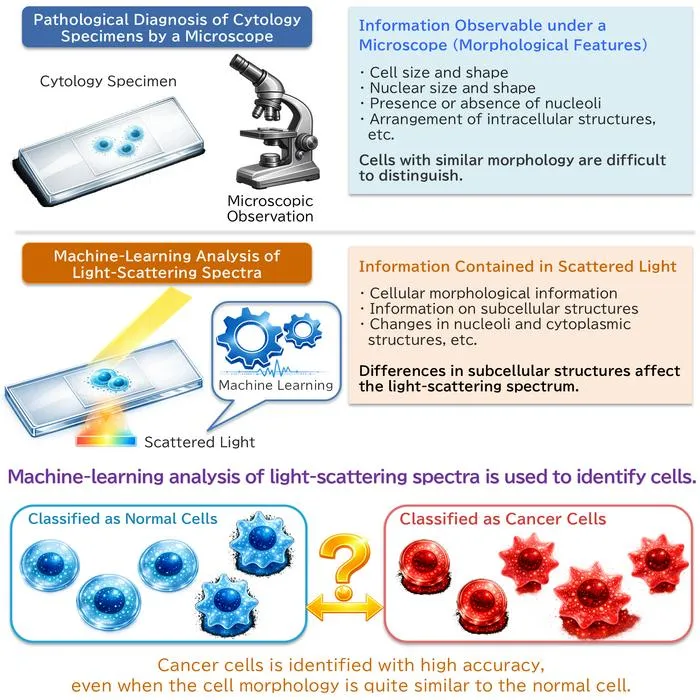
AI System Enhances Cancer Cell Detection via Light Scattering Spectra
Japanese researchers developed an AI system using light scattering spectra to improve cancer cell identification in cytology.
•EurekAlert
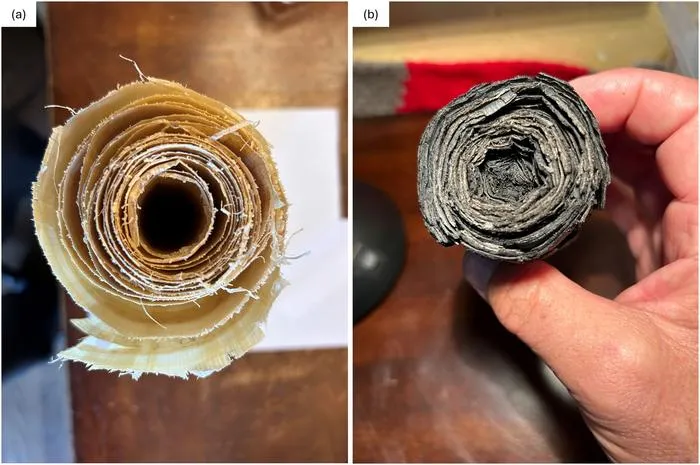
AI and X-ray Imaging Reveal Lost Texts in Ancient Roman Scrolls
AI and x-ray technology enable scientists to virtually read previously unreadable, carbonized Roman scrolls from Herculaneum.

•EurekAlert
AI’s Potential to Expand, Not Shrink, the Clinical Workforce
AI advancements may lead to more, not fewer, healthcare jobs, challenging common fears about workforce reductions in specialties like radiology.