
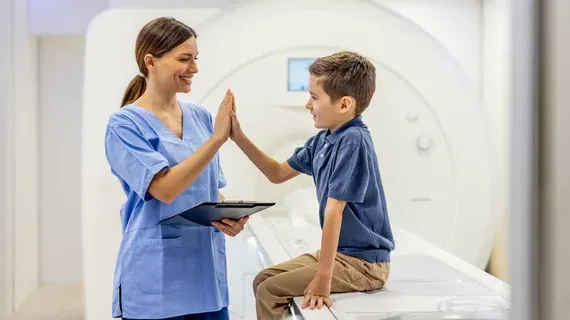
Experts outline five central barriers hampering adoption of AI in pediatric cancer imaging.
Key Details
- 1Pediatric cancers represent only about 1% of all new cancer diagnoses, resulting in very limited imaging datasets.
- 2Small and rare tumor subtypes further restrict the volume of data available for AI model training.
- 3Available pediatric imaging data are fragmented across over 200 specialized U.S. cancer centers.
- 4Lack of systematic data sharing prevents AI models from generalizing across institutions and imaging platforms.
- 5Adult oncology AI success stories have not directly translated to pediatric populations due to these barriers.
Why It Matters
Improving AI adoption in pediatric cancer imaging could enhance diagnosis and care, but requires addressing unique data and collaboration hurdles. Cross-institutional efforts and better data sharing are crucial for advancing effective AI applications in pediatric radiology.

Source
Radiology Business
Related News

•Radiology Business
Real-World Study: Radiology AI Best in Emergency and Inpatient Settings
A commercial AI tool for intracranial aneurysm detection outperformed in inpatient and emergency settings but yielded limited benefits for outpatients in a major health system study.

•Radiology Business
New Rubric Enhances Safety of AI-Generated Radiology Summaries
Researchers developed a five-factor rubric to assess the safety and quality of AI-generated, patient-friendly radiology report summaries.
•Radiology Business
AI Model Surpasses Radiologists in Detecting Subtle Hip Fractures
A new AI model outperformed radiologists in identifying difficult-to-detect femoral neck fractures on radiographs.