
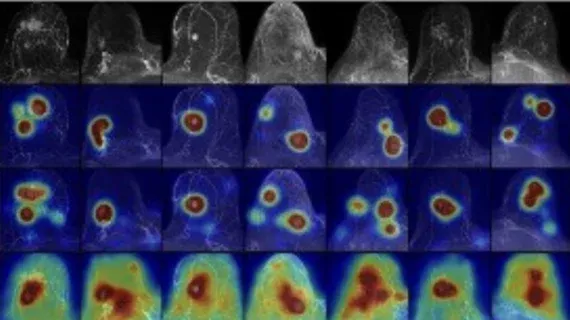
Researchers developed an explainable AI model to improve breast cancer detection in MRI with lower false positive rates.
Key Details
- 1AI model was trained on over 10,000 contrast-enhanced breast MRI exams from 2005 to 2022.
- 2The dataset included diverse cases and varying categories of breast density for robust training.
- 3Unlike prior models, this AI was evaluated on both low- and high-prevalence cancer cohorts, improving clinical relevance.
- 4The model features explainability to provide evidence-backed decisions, critical for clinical adoption.
- 5A key aim is to reduce false positive rates, a common issue in breast MRI diagnostics.
Why It Matters
False positives in breast MRI can lead to unnecessary anxiety and follow-up tests. Explainable, robust AI models like this can aid radiologists in accurate cancer detection and support clinical integration through transparency.
Source
Health Imaging
Related News

•Radiology Business
Meta Funds Ohio State’s Radiology AI Innovation Projects
Meta will fund Ohio State researchers to explore AI-driven advancements in radiology, including chest X-ray reporting and disease prediction.

•AuntMinnie
AI Triage Tool Speeds Up ICH Head CT Turnaround in ED
AI-based triage for intracranial hemorrhage on head CT reduced emergency department report turnaround by 13 minutes.
•AuntMinnie
ChatGPT-5 Performs Poorly at Detecting Distal Radius Fractures on X-rays
ChatGPT-5 missed about half of distal radius fractures on x-rays, showing limited diagnostic capability in a real-world scenario.