
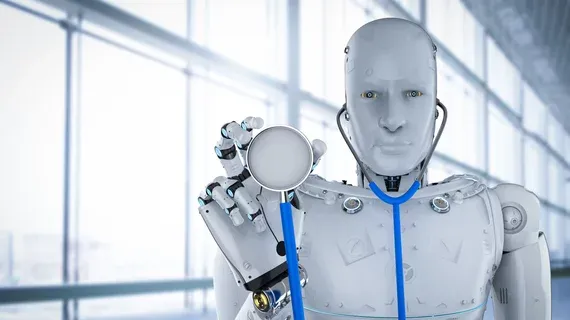
Not all AI applications in radiology provide clinical value, experts caution, urging careful selection based on clear usefulness criteria.
Key Details
- 1Experts published a paper in 'Current Problems in Diagnostic Radiology' outlining criteria for 'useful' versus 'useless' radiology AI.
- 2'Useful' AI is defined as addressing tasks impossible for humans, providing scalability, or demonstrating proven outcome improvements.
- 3'Useless' AI often replicates tasks already performed efficiently by radiologists, such as detecting simple findings in single images.
- 4Authors stress the importance of radiomics, large-scale text processing, and high-volume image analysis as areas where AI surpasses human ability.
- 5Physicians are encouraged to scrutinize AI adoption to ensure that clinical skills are preserved and advances are meaningful.
Why It Matters
As AI integration increases in radiology, distinguishing impactful applications helps avoid wasted effort and ensures technology advances clinical care. This perspective informs both clinicians and developers about the most valuable directions for radiology AI innovation.

Source
Radiology Business
Related News
•Radiology Business
Real-World Study: Radiology AI Best in Emergency and Inpatient Settings
A commercial AI tool for intracranial aneurysm detection outperformed in inpatient and emergency settings but yielded limited benefits for outpatients in a major health system study.
•Radiology Business
New Rubric Enhances Safety of AI-Generated Radiology Summaries
Researchers developed a five-factor rubric to assess the safety and quality of AI-generated, patient-friendly radiology report summaries.
•Radiology Business
AI Model Surpasses Radiologists in Detecting Subtle Hip Fractures
A new AI model outperformed radiologists in identifying difficult-to-detect femoral neck fractures on radiographs.