
AI-driven dynamic models may predict disease tipping points earlier by analyzing changes in health data, including imaging.
Key Details
- 1Editorial in 'Intelligent Medicine' advocates for dynamics-driven AI to detect early disease transitions from evolving health datasets.
- 2Dynamic network biomarker (DNB) theory has identified gene expression instability before flu symptoms and predicted tumor progression with >80% accuracy.
- 3Single-sample individual-specific edge-network analysis (iENA) achieved AUC > 0.9 in transcriptomics, and hybrid deep learning models reduced blood-glucose prediction error by over 55%.
- 4Temporal graph neural networks and Transformers applied to EHRs and imaging (e.g., fMRI) showed improved prediction accuracy (by up to 15% in diagnosis; accurate tinnitus outcome prediction).
- 5Editorial emphasizes the need for multimodal data integration (including imaging, omics, EHR, and wearables) for holistic disease modeling.
- 6Highlights challenges: data heterogeneity, interpretability, causality, privacy, and clinical validation requirements.
Why It Matters
These approaches move AI beyond static diagnostics to real-time, individualized prediction and early warning, potentially transforming preventive medicine—including for radiology by integrating imaging data as one of many predictive signals. Rigorous prospective validation and multimodal integration will be key for clinical adoption in radiology and other specialties.

Source
EurekAlert
Related News
•EurekAlert
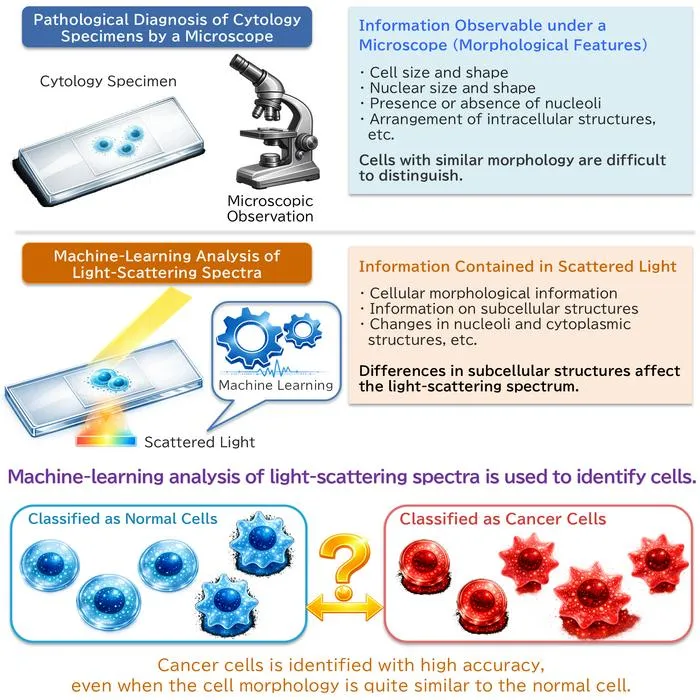
AI System Enhances Cancer Cell Detection via Light Scattering Spectra
Japanese researchers developed an AI system using light scattering spectra to improve cancer cell identification in cytology.
•EurekAlert
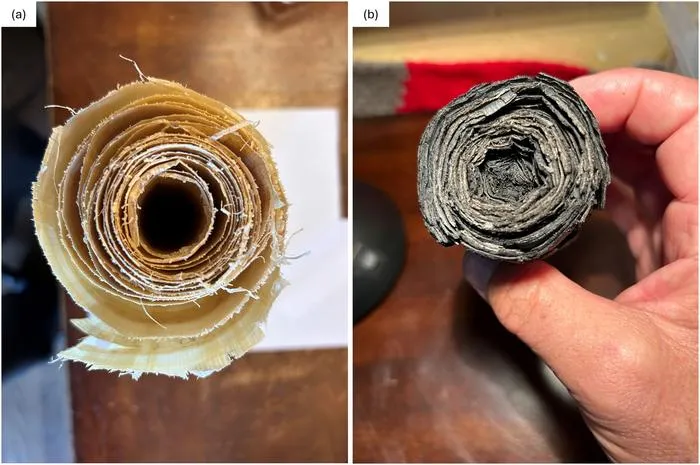
AI and X-ray Imaging Reveal Lost Texts in Ancient Roman Scrolls
AI and x-ray technology enable scientists to virtually read previously unreadable, carbonized Roman scrolls from Herculaneum.

•EurekAlert
AI’s Potential to Expand, Not Shrink, the Clinical Workforce
AI advancements may lead to more, not fewer, healthcare jobs, challenging common fears about workforce reductions in specialties like radiology.