
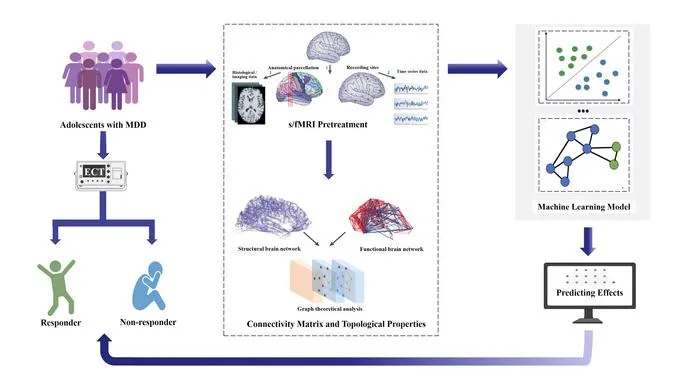
Researchers developed a dual-branch graph attention network that uses structural and functional MRI data to accurately predict individual responses to electroconvulsive therapy in adolescents with major depressive disorder.
Key Details
- 1Study by Chongqing Medical University used deep learning (DBGAN) to fuse sMRI and fMRI data.
- 2Model tested on 27 adolescent MDD patients, achieving 85.3% accuracy and a 0.905 F1 score.
- 3Outperformed SVM, Random Forest, and standard CNNs on prediction performance.
- 4Key predictive regions: right posterior insula, dorsal cingulate gyrus (functional) and left amygdala, right hippocampus (structural).
- 5Findings suggest multi-modal MRI integration improves prediction versus single-modality approaches.
Why It Matters
The ability to predict ECT treatment response at the individual level could significantly enhance personalized psychiatry and optimize resource allocation. The integration of multi-modal imaging demonstrates the growing potential of advanced AI models in neuroimaging-driven mental health treatment.

Source
EurekAlert
Related News
•EurekAlert
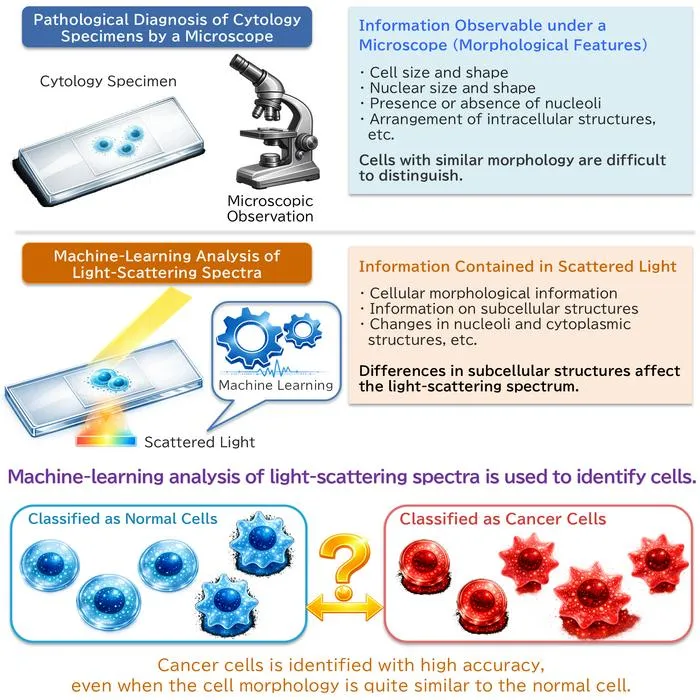
AI System Enhances Cancer Cell Detection via Light Scattering Spectra
Japanese researchers developed an AI system using light scattering spectra to improve cancer cell identification in cytology.
•EurekAlert
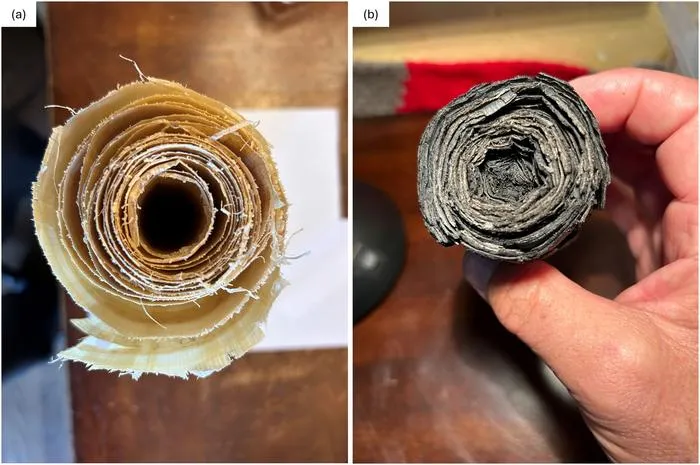
AI and X-ray Imaging Reveal Lost Texts in Ancient Roman Scrolls
AI and x-ray technology enable scientists to virtually read previously unreadable, carbonized Roman scrolls from Herculaneum.

•EurekAlert
AI’s Potential to Expand, Not Shrink, the Clinical Workforce
AI advancements may lead to more, not fewer, healthcare jobs, challenging common fears about workforce reductions in specialties like radiology.