
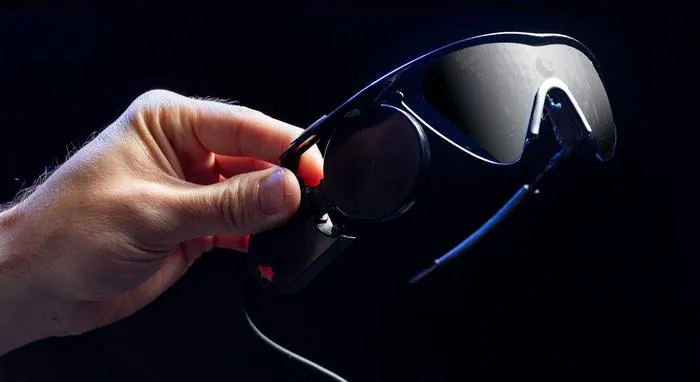
Researchers show that AI can optimize stimulation patterns in brain-implanted visual prostheses to improve perceived vision in blind individuals.
Key Details
- 1A deep learning model was used to design electrical stimulation patterns for visual cortex electrodes temporarily implanted in a blind participant.
- 2AI-driven stimulation reproduced targeted neural activity more accurately and with less electrical current than traditional approaches.
- 3Neural activity recorded after stimulation provided better prediction of perceived visual effects than stimulation settings alone.
- 4The study involved collaboration between UC Santa Barbara, ETH Zurich, and Miguel Hernández University.
- 5Findings suggest AI can help create adaptive, personalized stimulation patterns for future visual prostheses.
- 6Supported in part by a $2 million NIH Director’s New Innovator Award; published in Neuron on August 7, 2026.
Why It Matters
This research represents a significant advancement in neuroimaging and neural prosthetics, demonstrating that deep learning can enhance the effectiveness and personalization of bionic eyes. It brings AI deeper into the realm of brain-device interfacing, with potential lessons for other neural/functional imaging and stimulation applications in radiology.

Source
EurekAlert
Related News

•EurekAlert
AI Model Combines ECG and Blood Tests to Spot Heart Transplant Rejection
An AI model integrating ECG data and blood biomarkers predicts heart transplant rejection with high specificity, reducing the need for invasive biopsies.

•EurekAlert
NIH Grant Funds AI Tool for Lung Cancer Discovery at Weill Cornell
Dr. Olivier Elemento receives an NIH Pioneer Award to develop an AI-human hybrid platform for cancer research, initially focusing on lung cancer using imaging and tissue data.
•EurekAlert
Study Shows AI Vision Misses Human-Like Perceptual Illusions
A York University study finds that AI vision systems lack the human-like perceptual shifts seen in biological vision during visual illusions.