
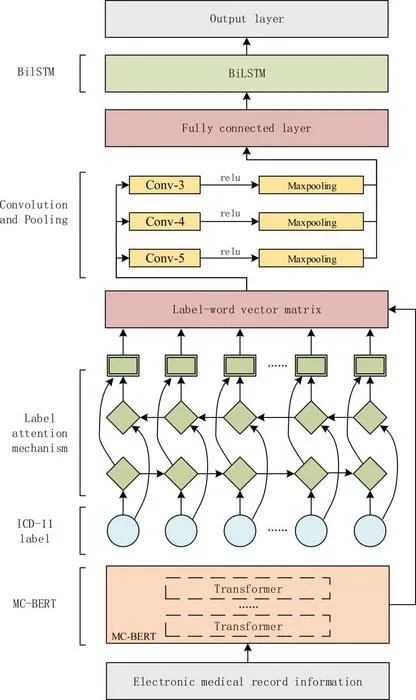
Researchers developed a deep learning model achieving high accuracy in automatic ICD-11 coding of Chinese electronic medical records.
Key Details
- 1The new LA-TextCNN-BiLSTM model leverages MC-BERT and a label attention mechanism.
- 2Evaluated on real-world EMRs, it achieved 83.86% accuracy, 75.82% macro-F1, and 82.83% micro-F1 scores.
- 3Label attention helps the model focus on diagnostically relevant text, improving performance over traditional methods.
- 4Automated ICD-11 coding can streamline hospital workflows and reduce manual coding errors, especially in complex Chinese clinical language settings.
- 5Research was conducted by Peking Union Medical College Hospital & WHO Family of International Classification Collaborating Center.
Why It Matters
Automating ICD-11 coding with advanced NLP can greatly reduce the labor and error burden in extracting structured diagnostic data, which has wide-reaching implications for radiology AI, clinical research, and healthcare efficiency—particularly in linguistically complex environments like Chinese EMRs.

Source
EurekAlert
Related News
•EurekAlert
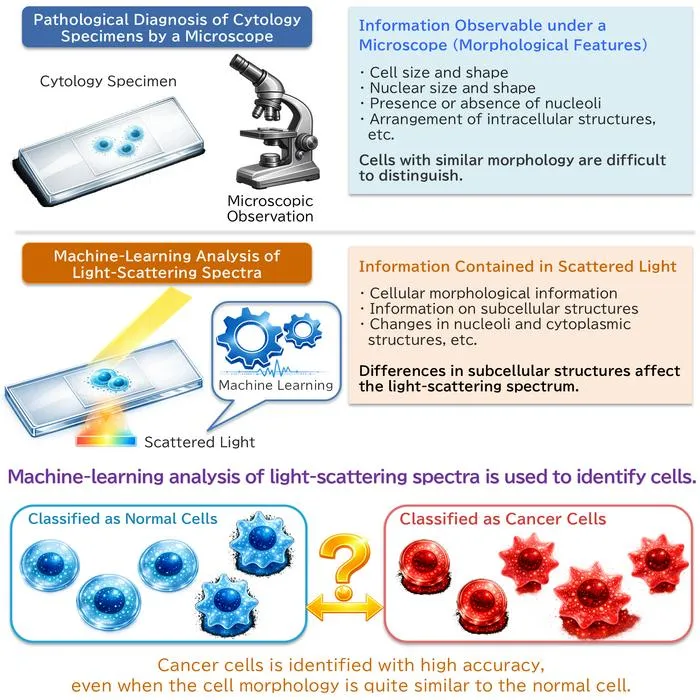
AI System Enhances Cancer Cell Detection via Light Scattering Spectra
Japanese researchers developed an AI system using light scattering spectra to improve cancer cell identification in cytology.
•EurekAlert
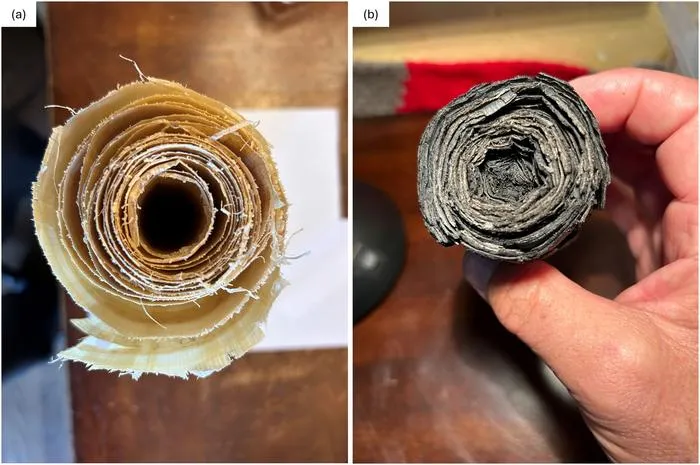
AI and X-ray Imaging Reveal Lost Texts in Ancient Roman Scrolls
AI and x-ray technology enable scientists to virtually read previously unreadable, carbonized Roman scrolls from Herculaneum.

•EurekAlert
AI’s Potential to Expand, Not Shrink, the Clinical Workforce
AI advancements may lead to more, not fewer, healthcare jobs, challenging common fears about workforce reductions in specialties like radiology.