
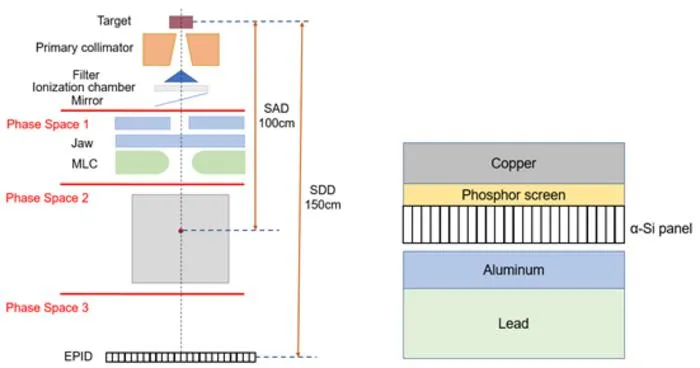
Researchers developed a fast, accurate method combining Monte Carlo simulation and deep learning to generate EPID transmission dose data for radiation therapy quality assurance.
Key Details
- 1A new framework merges GPU-accelerated Monte Carlo (ARCHER) simulations with a SUNet deep learning model for denoising EPID dose data.
- 2Tested with IMRT lung cancer cases, denoising improved SSIM from 0.61 to 0.95 and gamma passing rate from 48.47% to 89.10% for low-particle data.
- 3At 1×10⁷ simulated particles, the method achieved an SSIM of 0.96, GPR of 94.35%, and a processing time of only 1.88 seconds.
- 4The approach enables rapid, patient-specific QA necessary for online adaptive radiation therapy (ART).
- 5Denoised dose images maintain clinical details while reducing noise/graininess, supporting practical deployment in routine workflows.
Why It Matters
This innovation addresses a major bottleneck in clinical radiotherapy QA by dramatically accelerating Monte Carlo-based dose verification while preserving high accuracy. It enables wider implementation of adaptive and real-time therapies, ultimately improving patient safety and workflow efficiency.

Source
EurekAlert
Related News
•EurekAlert
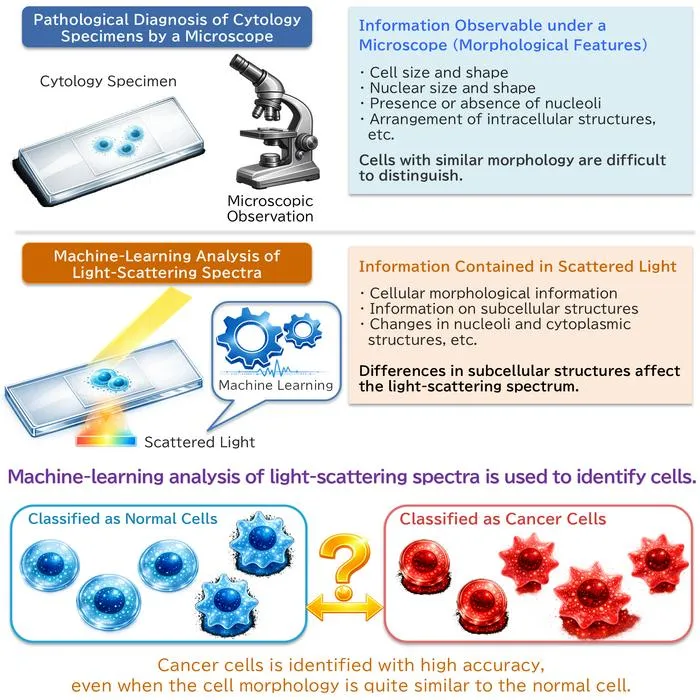
AI System Enhances Cancer Cell Detection via Light Scattering Spectra
Japanese researchers developed an AI system using light scattering spectra to improve cancer cell identification in cytology.
•EurekAlert
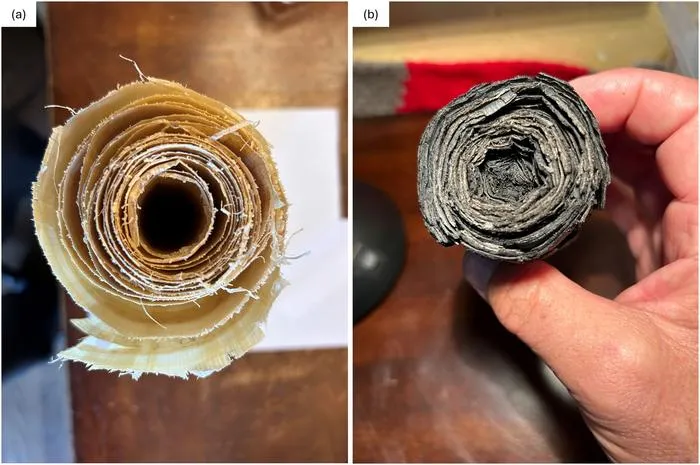
AI and X-ray Imaging Reveal Lost Texts in Ancient Roman Scrolls
AI and x-ray technology enable scientists to virtually read previously unreadable, carbonized Roman scrolls from Herculaneum.

•EurekAlert
AI’s Potential to Expand, Not Shrink, the Clinical Workforce
AI advancements may lead to more, not fewer, healthcare jobs, challenging common fears about workforce reductions in specialties like radiology.