

Dana-Farber researchers present major cancer clinical trial results, including AI-driven data analysis, at ESMO Congress 2025.
Key Details
- 1Dana-Farber leads four phase 3 studies in breast, lung, and bladder cancer at ESMO Congress 2025.
- 2Key trials address advanced breast cancer treatment, NSCLC first-line therapy, and ctDNA-guided therapy in bladder cancer.
- 3Patient-reported data from SERENA-6 trial shows improved quality of life for metastatic breast cancer patients.
- 4Presentation of AI-generated synthetic cohorts from a 19,164 patient metastatic breast cancer dataset for real-world data analysis.
- 5Blood biomarker (KIM-1) study may help guide advanced kidney cancer treatment decisions.
- 6ESMO 2025 held in Berlin, Oct 17–21, with global participation.
Why It Matters
The use of AI to generate synthetic cohorts and analyze real-world oncology data can accelerate clinical trials and protect patient privacy, representing significant advancements for radiology, cancer informatics, and AI communities. These developments offer pathways to improved research collaboration and personalized cancer care.

Source
EurekAlert
Related News
•EurekAlert
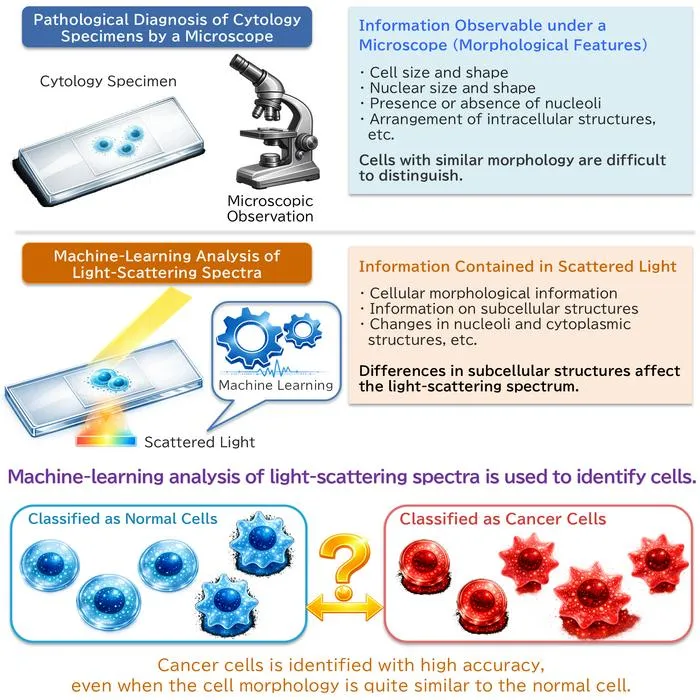
AI System Enhances Cancer Cell Detection via Light Scattering Spectra
Japanese researchers developed an AI system using light scattering spectra to improve cancer cell identification in cytology.
•EurekAlert
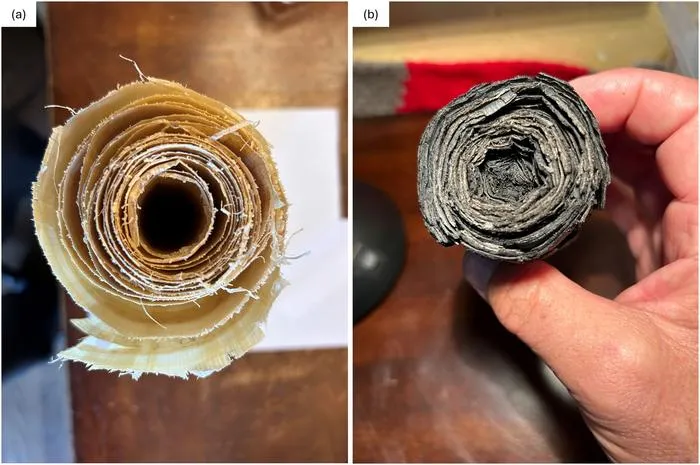
AI and X-ray Imaging Reveal Lost Texts in Ancient Roman Scrolls
AI and x-ray technology enable scientists to virtually read previously unreadable, carbonized Roman scrolls from Herculaneum.

•EurekAlert
NYU AI Model Improves 5-Year Breast Cancer Risk Prediction via 3D Mammograms
NYU researchers developed an AI model using longitudinal 3D mammograms that outperforms single-scan and 2D-based tools in predicting 5-year breast cancer risk.