

The CoSyn tool leverages synthetic data to help open-source AI models excel at understanding complex, text-rich images such as medical diagrams.
Key Details
- 1Penn Engineering and the Allen Institute for AI developed CoSyn to generate scientific charts and diagrams as training data for open-source vision-language models.
- 2CoSyn-400K includes over 400,000 synthetic images and 2.7 million sets of instructions, spanning scientific charts, chemical structures, and more.
- 3CoSyn-trained models outperformed proprietary systems, including GPT-4V and Gemini 1.5 Flash, on seven benchmarks.
- 4A small synthetic dataset (7,000 images) allowed their model to beat others trained on millions of real images for the NutritionQA benchmark.
- 5The approach eliminates copyright risks and supports wide, open-source access.
Why It Matters
Synthetic data generation like CoSyn can democratize advanced image understanding for medical and radiology AI, improving model accuracy while addressing data scarcity and copyright barriers. This supports innovation in clinical decision support and scientific research for radiology professionals.

Source
EurekAlert
Related News
•EurekAlert
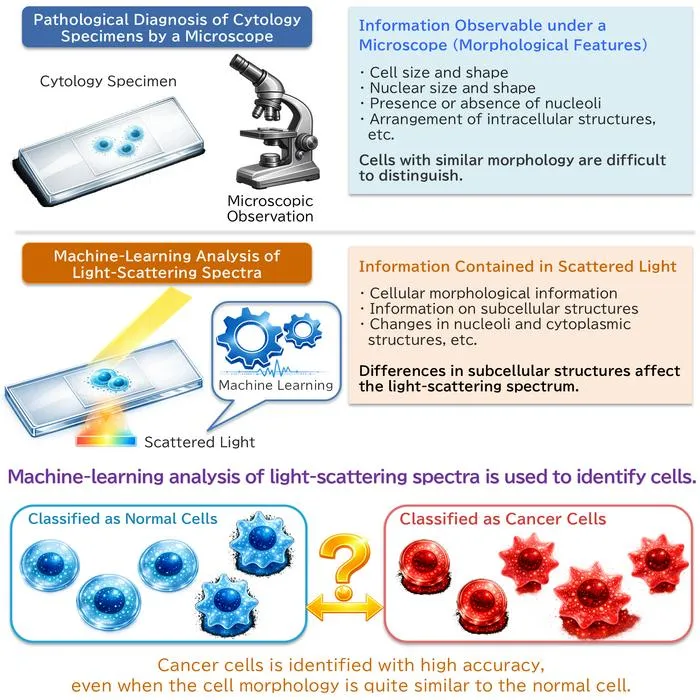
AI System Enhances Cancer Cell Detection via Light Scattering Spectra
Japanese researchers developed an AI system using light scattering spectra to improve cancer cell identification in cytology.
•EurekAlert
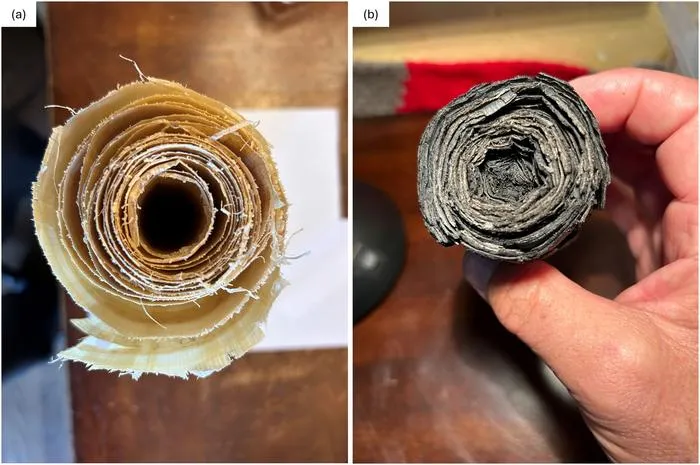
AI and X-ray Imaging Reveal Lost Texts in Ancient Roman Scrolls
AI and x-ray technology enable scientists to virtually read previously unreadable, carbonized Roman scrolls from Herculaneum.

•EurekAlert
AI’s Potential to Expand, Not Shrink, the Clinical Workforce
AI advancements may lead to more, not fewer, healthcare jobs, challenging common fears about workforce reductions in specialties like radiology.