
Radiology research abstracts show a marked rise in LLM-assisted editing since the release of ChatGPT.
Key Details
- 1A study analyzed 32,335 English-language medical research abstracts (2020–2025), including 23,227 journal articles and 9,108 preprints across radiology, surgery, and internal medicine.
- 2For radiology journal articles, LLM-modified text increased from 0.5% pre-ChatGPT to 3% post-ChatGPT; for preprints, it rose from 1.4% to 7%.
- 3‘Alpha’ values measuring LLM influence grew from 1.1% (Q1 2023) to 6.5% (Q2 2025) in radiology articles and showed increases in Asia, Europe, and North America.
- 4Surgery and internal medicine also saw post-ChatGPT increases, though radiology preprints saw the sharpest rise.
- 5Authors caution that LLM use in writing isn't necessarily misconduct, as many journals have guidance on responsible AI use in scientific writing.
Why It Matters
Growing adoption of LLMs for drafting and editing radiology abstracts has implications for publication norms, author accountability, and transparency in radiological research. Understanding these trends can help journals and researchers align practices with evolving technology.

Source
AuntMinnie
Related News
•Radiology Business
Real-World Study: Radiology AI Best in Emergency and Inpatient Settings
A commercial AI tool for intracranial aneurysm detection outperformed in inpatient and emergency settings but yielded limited benefits for outpatients in a major health system study.
•Radiology Business
New Rubric Enhances Safety of AI-Generated Radiology Summaries
Researchers developed a five-factor rubric to assess the safety and quality of AI-generated, patient-friendly radiology report summaries.
•Radiology Business
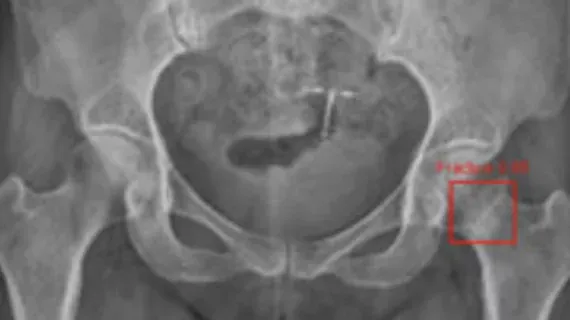
AI Model Surpasses Radiologists in Detecting Subtle Hip Fractures
A new AI model outperformed radiologists in identifying difficult-to-detect femoral neck fractures on radiographs.