
Back to all news
Biodegradable Wearable Sensor with AI Enables Interference-Free Respiration Monitoring
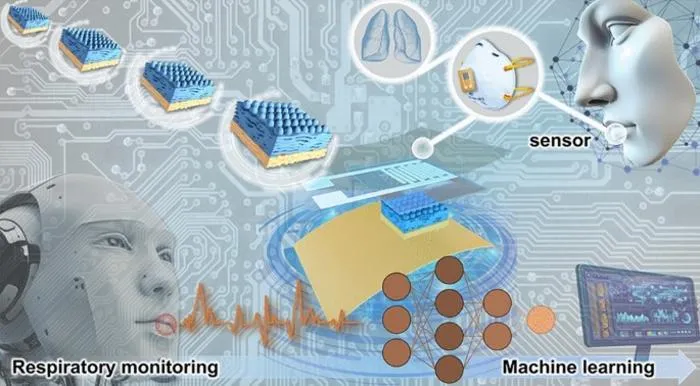
Researchers developed a biodegradable, interference-resistant smart mask sensor with AI-driven respiratory classification capability.
Key Details
- 1The cellulose-based piezoresistive sensor maintains high accuracy across humidity (50–100% RH) and temperature (30–80°C) fluctuations.
- 2A unique cylindrical micro-dome structure and hydrogen bonding deliver high durability (over 25,000 breath cycles) and sensitivity (24 ms response time).
- 3Embedded wireless module streams respiratory data and supports deep-learning classification (~90% accuracy, ROC-AUC ≥ 0.96).
- 4Biodegradable components allow for breakdown within 150 days in soil, addressing e-waste concerns.
- 5Large-scale, low-cost fabrication demonstrated; applications range from at-home apnea screening to mass clinic deployment.
Why It Matters
This innovation enables accurate, real-time respiratory monitoring in diverse environments, paving the way for sustainable clinical and telehealth applications. The AI classification of breathing patterns expands the role of non-invasive, wearable sensors in remote patient care and disease management.

Source
EurekAlert
Related News

•EurekAlert
UVA's $4M NIH Grant Backs AI to Optimize Cardiac MRI Therapies
UVA secures $4 million NIH funding to develop GenStrain, an AI model using MRI data to personalize cardiac pacing therapies.

•EurekAlert
Machine Learning Models Predict Cancer Risk with Routine Health Data
Researchers developed machine learning models using routinely collected health data to predict individual risk for 20 common cancers, outperforming traditional methods for several cancer types.

•EurekAlert
Duke Receives $25M to Lead National Trustworthy AI Hub for Dementia and Aging
Duke University has launched a $25 million national center to make AI for aging and dementia clinically robust and trustworthy.