
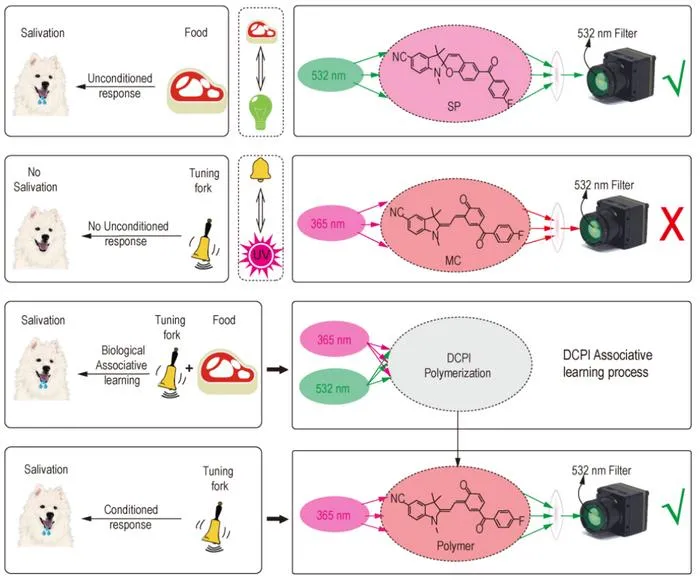
Researchers unveil a Pavlov-inspired optical neural network that learns via light-based associative memory, removing the need for computation-heavy training.
Key Details
- 1Optical neural networks trained via sequential UV and visible light exposures inspired by Pavlov’s classical conditioning.
- 2A dual-color photoresist 'learns' to emit green fluorescence after associative light exposure.
- 3Enables direct, in-situ training for pattern recognition such as letters ‘N’, ‘V’, ‘Z’ and simulated digit recognition.
- 4Eliminates the need for backpropagation or electronic processing during training.
- 5Potential for low-cost, robust photonic AI hardware ideal for real-time, edge computing in smart sensors and industrial monitoring.
Why It Matters
Material-based, computation-free training of optical neural networks could vastly reduce costs and energy use for future medical imaging AI hardware. This approach offers scalable solutions for edge applications where conventional processing resources are limited.

Source
EurekAlert
Related News
•EurekAlert
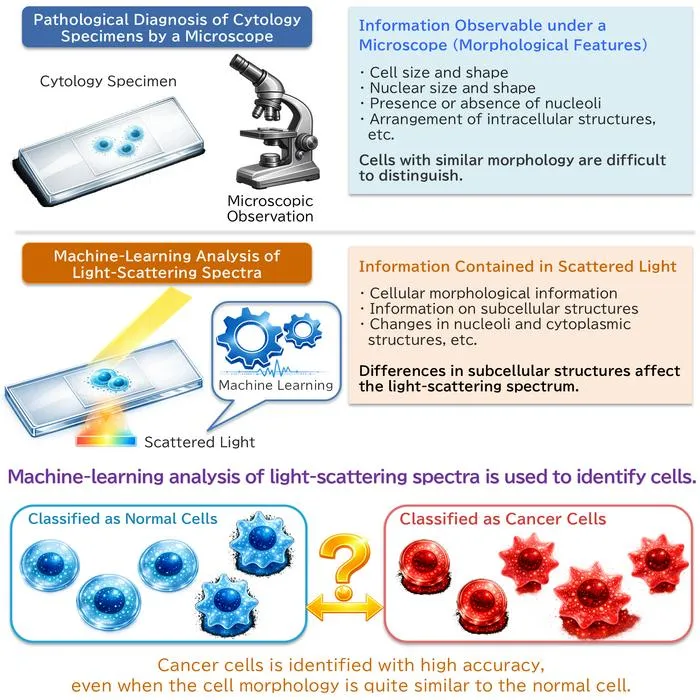
AI System Enhances Cancer Cell Detection via Light Scattering Spectra
Japanese researchers developed an AI system using light scattering spectra to improve cancer cell identification in cytology.
•EurekAlert
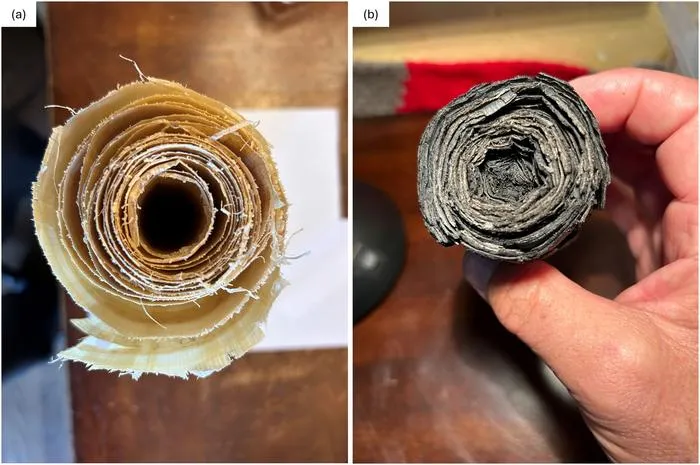
AI and X-ray Imaging Reveal Lost Texts in Ancient Roman Scrolls
AI and x-ray technology enable scientists to virtually read previously unreadable, carbonized Roman scrolls from Herculaneum.

•EurekAlert
AI’s Potential to Expand, Not Shrink, the Clinical Workforce
AI advancements may lead to more, not fewer, healthcare jobs, challenging common fears about workforce reductions in specialties like radiology.