
Back to all news
Bio-Inspired E-Skin Achieves High-Fidelity Signal Capture and ML-Controlled Teleoperation
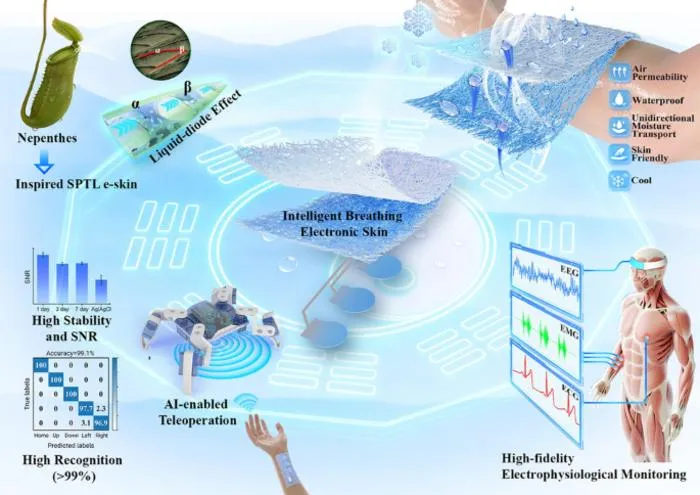
Researchers develop a breathing, stretchable e-skin for robust biosignal acquisition and AI-driven teleoperation, outperforming conventional electrodes.
Key Details
- 1The e-skin uses a Nepenthes-inspired Janus bilayer to actively transport sweat away, maintaining interface dryness under heavy perspiration.
- 2Device specs: 627% stretchability, 20.02 mm/s breathability, 7.39 kPa−1 pressure sensitivity, >10,000 cycle endurance (<3% capacitance decay).
- 3Enables high-fidelity acquisition of EEG, EMG, and ECG signals, exceeding commercial Ag/AgCl electrodes in signal-to-noise ratio (EMG: 24.25 dB vs 15.02 dB).
- 4Integrated machine learning allows EMG-driven robotic teleoperation and handwritten letter recognition with >95% accuracy; gesture recognition achieves >99%.
- 5Robust performance under intense sweating with no skin irritation over 2-day testing.
Why It Matters
High-fidelity bio-integrated sensors like this e-skin could revolutionize electrophysiological signal acquisition for radiology, telemedicine, and AI-based diagnostics, overcoming longstanding issues of signal loss due to sweat. Its successful integration of machine learning for control applications opens the door for new forms of patient monitoring and robotic assistance in clinical environments.

Source
EurekAlert
Related News
•EurekAlert
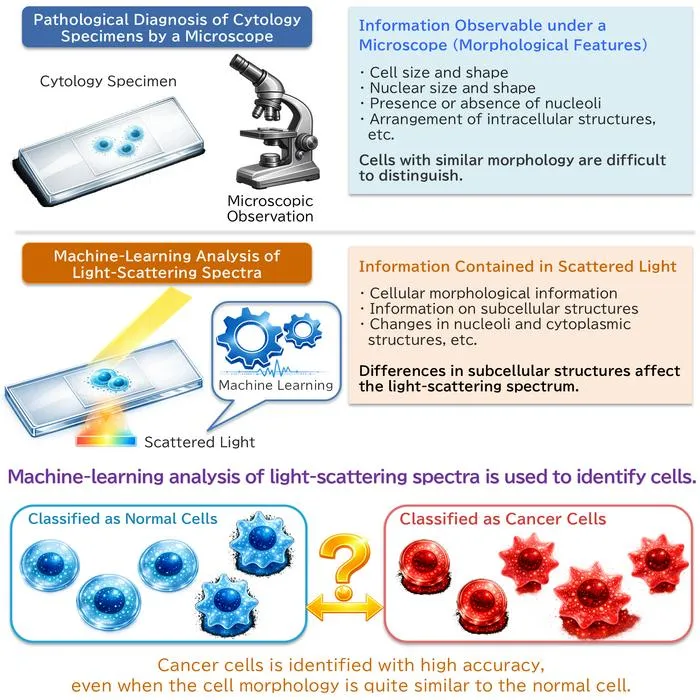
AI System Enhances Cancer Cell Detection via Light Scattering Spectra
Japanese researchers developed an AI system using light scattering spectra to improve cancer cell identification in cytology.
•EurekAlert
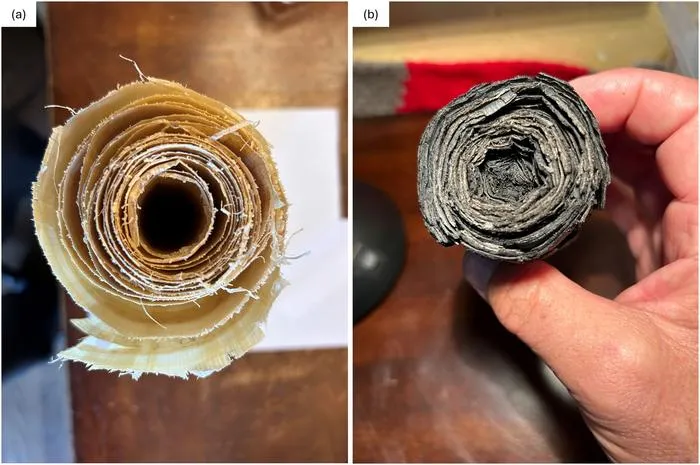
AI and X-ray Imaging Reveal Lost Texts in Ancient Roman Scrolls
AI and x-ray technology enable scientists to virtually read previously unreadable, carbonized Roman scrolls from Herculaneum.

•EurekAlert
AI’s Potential to Expand, Not Shrink, the Clinical Workforce
AI advancements may lead to more, not fewer, healthcare jobs, challenging common fears about workforce reductions in specialties like radiology.