
Researchers demonstrated AI could detect early laryngeal cancer from voice recordings, distinguishing it from benign conditions.
Key Details
- 1Laryngeal cancer affects over 1 million people worldwide, with high mortality rates.
- 2Diagnosis currently requires invasive endoscopy and biopsy; voice-based screening could simplify detection.
- 3The study analyzed 12,523 voice samples from 306 participants using the Bridge2AI-Voice dataset.
- 4Significant differences in acoustic features, especially harmonic-to-noise ratio, identified laryngeal cancer in men.
- 5Findings suggest voice could serve as a practical biomarker for cancer risk assessment, pending further validation.
Why It Matters
A non-invasive, AI-based screening tool for laryngeal cancer could enable earlier detection, reducing diagnostic delays and easing burden on specialists. This advances the potential of digital biomarkers and broadens the scope of imaging AI in oncology.

Source
EurekAlert
Related News
•EurekAlert
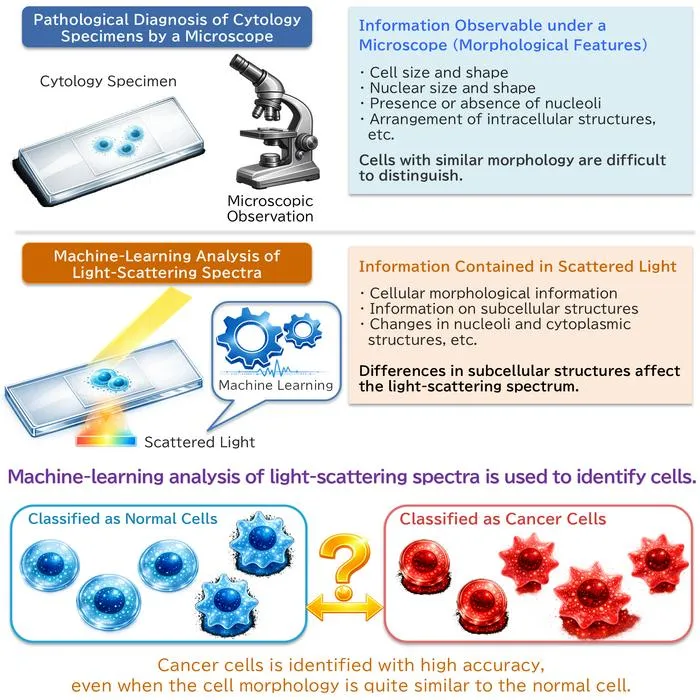
AI System Enhances Cancer Cell Detection via Light Scattering Spectra
Japanese researchers developed an AI system using light scattering spectra to improve cancer cell identification in cytology.

•EurekAlert
AI and X-ray Imaging Reveal Lost Texts in Ancient Roman Scrolls
AI and x-ray technology enable scientists to virtually read previously unreadable, carbonized Roman scrolls from Herculaneum.

•EurekAlert
AI’s Potential to Expand, Not Shrink, the Clinical Workforce
AI advancements may lead to more, not fewer, healthcare jobs, challenging common fears about workforce reductions in specialties like radiology.