
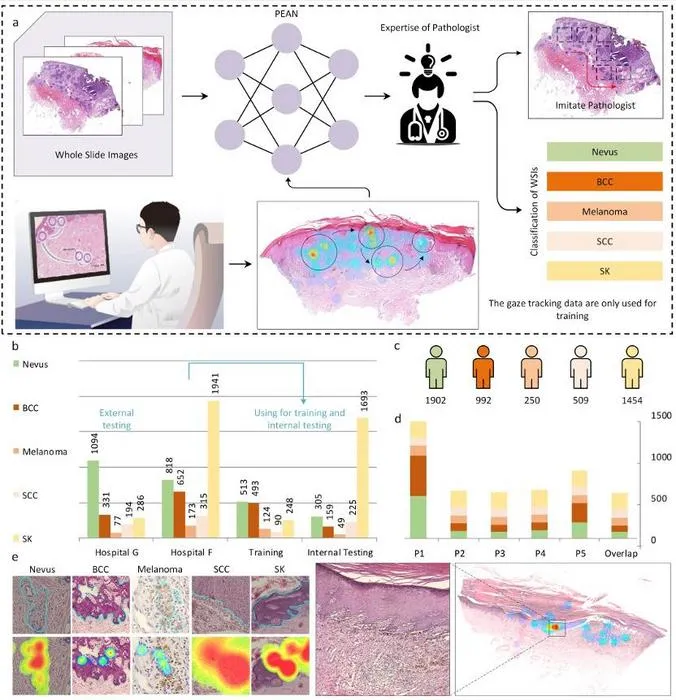
Researchers developed a deep learning system using eye-tracking data to enhance AI-powered biopsy image interpretation.
Key Details
- 1The Pathology Expertise Acquisition Network (PEAN) was trained using expert pathologists’ eye movements while reviewing 5,881 skin lesion slides.
- 2PEAN-C achieved 96.3% accuracy and 0.992 AUC on internal data and 93.0% accuracy and 0.984 AUC on external test data, exceeding the next best AI model by 5.5%.
- 3Using pathologist gaze data, the model identifies relevant tissue regions with much less manual labeling burden than traditional pixel-wise annotation.
- 4Integrating PEAN-generated data with other models improved classification accuracy and AUC, statistically significant by paired t-test (p = 0.0053 and 0.0161).
- 5The aim is to scale to personalized diagnosis and multimodal predictive models, leveraging low-cost data collection from expertise monitoring.
Why It Matters
This study demonstrates a scalable, low-burden way to transfer human diagnostic expertise into AI tools, potentially enhancing accuracy and acceptance in digital pathology and, by extension, inspiring innovations in radiology imaging AI with analogous annotation challenges.

Source
EurekAlert
Related News
•EurekAlert
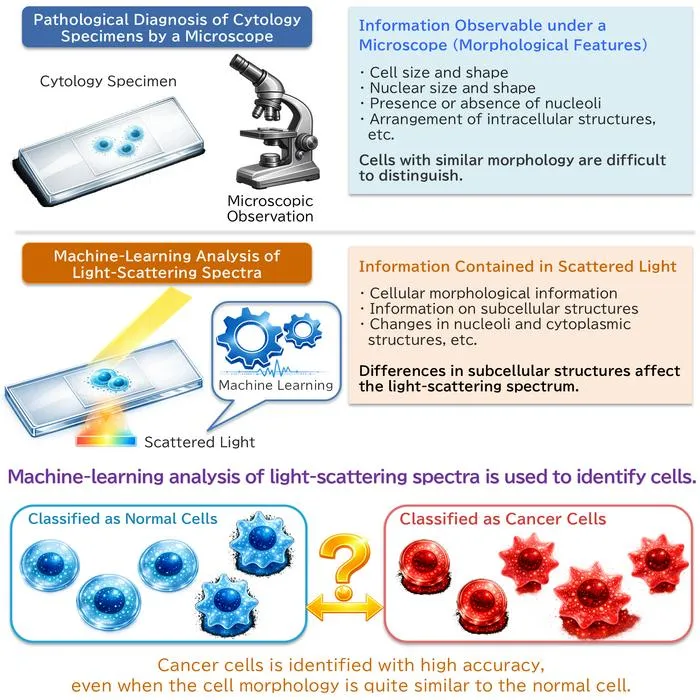
AI System Enhances Cancer Cell Detection via Light Scattering Spectra
Japanese researchers developed an AI system using light scattering spectra to improve cancer cell identification in cytology.
•EurekAlert
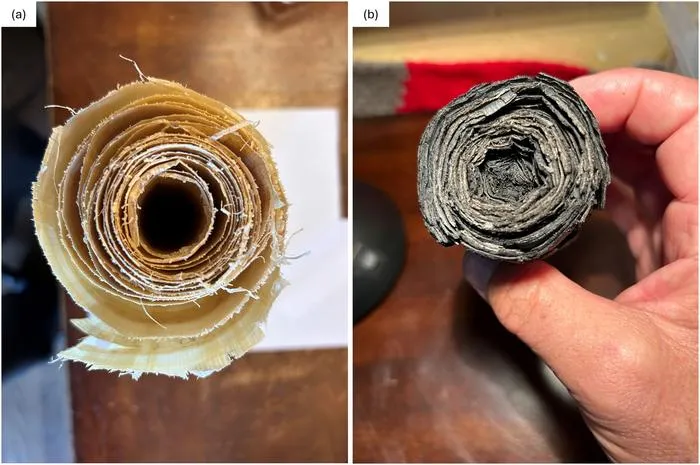
AI and X-ray Imaging Reveal Lost Texts in Ancient Roman Scrolls
AI and x-ray technology enable scientists to virtually read previously unreadable, carbonized Roman scrolls from Herculaneum.

•EurekAlert
AI’s Potential to Expand, Not Shrink, the Clinical Workforce
AI advancements may lead to more, not fewer, healthcare jobs, challenging common fears about workforce reductions in specialties like radiology.