
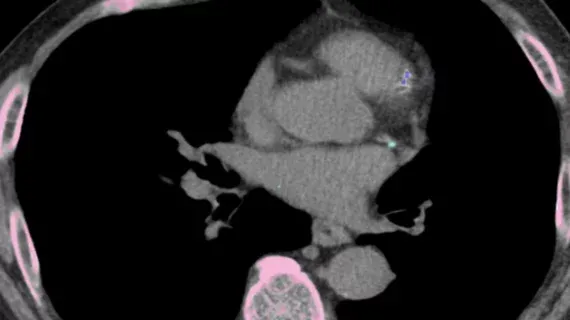
AI may enable more accurate tracking of coronary artery calcium (CAC) growth using routine lung cancer screening CT scans.
Key Details
- 1CAC is commonly found incidentally in up to 12% of lung cancer screening patients.
- 2Increases in CAC scores between screenings are strongly correlated with heightened risk of adverse cardiovascular events.
- 3Debate exists on the clinical significance of CAC growth over time due to insufficient study.
- 4AI is proposed as a tool to overcome technical challenges, such as lack of ECG gating, in longitudinal CAC assessment on low-dose CT scans.
- 5Annual lung cancer CT screenings present opportunities for repeated CAC monitoring.
Why It Matters
This development could allow radiologists to leverage existing lung cancer screening CTs for dual cardiovascular risk monitoring, potentially leading to earlier detection of patients at risk for adverse events. Integrating AI for automated CAC tracking may improve clinical efficiency and patient outcomes.
Source
Health Imaging
Related News

•Radiology Business
Meta Funds Ohio State’s Radiology AI Innovation Projects
Meta will fund Ohio State researchers to explore AI-driven advancements in radiology, including chest X-ray reporting and disease prediction.

•AuntMinnie
ChatGPT-5 Performs Poorly at Detecting Distal Radius Fractures on X-rays
ChatGPT-5 missed about half of distal radius fractures on x-rays, showing limited diagnostic capability in a real-world scenario.
•AuntMinnie
AI Triage Tool Speeds Up ICH Head CT Turnaround in ED
AI-based triage for intracranial hemorrhage on head CT reduced emergency department report turnaround by 13 minutes.