
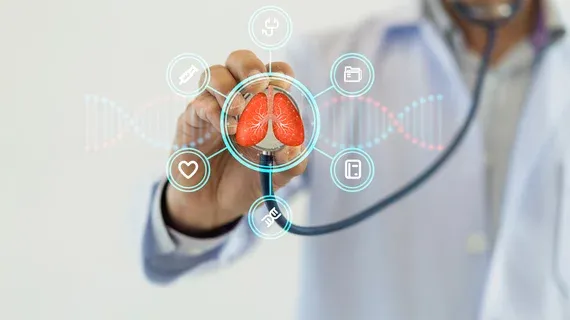
AI demonstrates higher accuracy than radiologists in predicting lung cancer treatment response from imaging.
Key Details
- 1Study is a meta-analysis of 11 retrospective studies comparing AI and radiologists for treatment response prediction.
- 2AI achieved a sensitivity of 0.90, specificity of 0.80, and accuracy of 0.90.
- 3Risk difference favored AI by 0.06 for sensitivity and 0.04 for specificity.
- 4Outcomes were modality-dependent, impacting the magnitude of AI's advantage.
Why It Matters
Improved prediction of treatment response could lead to more effective, personalized cancer care and alter clinical decision workflows. The results support the increasing role of AI in enhancing the accuracy of imaging-based assessments in oncology.
Source
Health Imaging
Related News
•Radiology Business
Real-World Study: Radiology AI Best in Emergency and Inpatient Settings
A commercial AI tool for intracranial aneurysm detection outperformed in inpatient and emergency settings but yielded limited benefits for outpatients in a major health system study.
•Radiology Business
New Rubric Enhances Safety of AI-Generated Radiology Summaries
Researchers developed a five-factor rubric to assess the safety and quality of AI-generated, patient-friendly radiology report summaries.
•Radiology Business
AI Model Surpasses Radiologists in Detecting Subtle Hip Fractures
A new AI model outperformed radiologists in identifying difficult-to-detect femoral neck fractures on radiographs.