
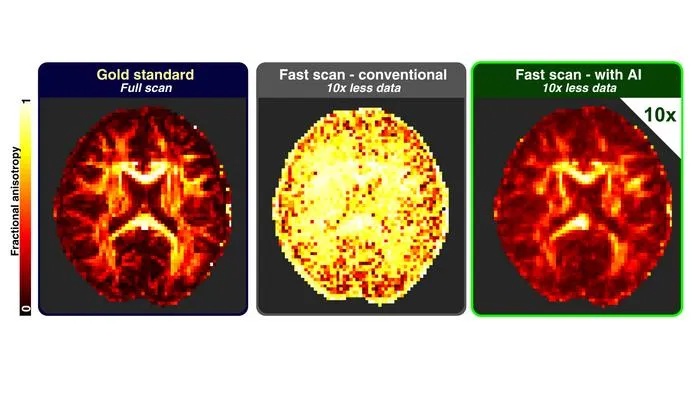
A simulation-based AI method can reconstruct brain MRI scans with only 10% of the usual data, greatly reducing scan times.
Key Details
- 1Researchers developed a method using AI and physics-based simulations to train models for brain MRI reconstruction.
- 2This approach eliminates the need for real patient data, reducing privacy issues and potential bias.
- 3The method achieves high accuracy using just 10% of the data normally required for diffusion-weighted MRI scans.
- 4Scan times could be reduced from about 40 minutes to roughly 8 minutes while maintaining clinical value.
- 5The solution allows retrospective analysis of old MRI data, enhancing research into neurodegenerative diseases like Alzheimer's.
- 6Findings are published in Communications Medicine (DOI: 10.1038/s43856-026-01614-6).
Why It Matters
Reducing MRI scan time and reliance on real data can improve access, reduce costs, and enable earlier, more robust diagnosis in clinical neuroimaging. AI-driven simulation also supports privacy and equity by overcoming traditional dataset limitations.

Source
EurekAlert
Related News
•EurekAlert
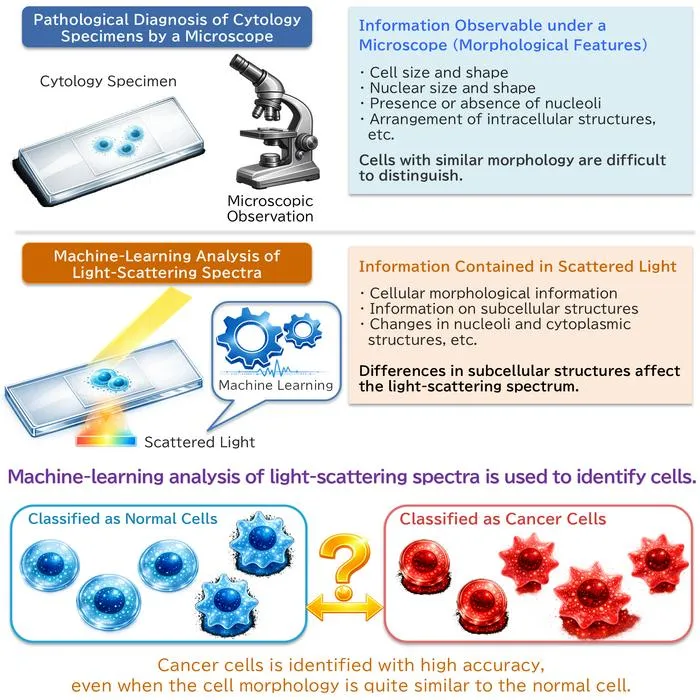
AI System Enhances Cancer Cell Detection via Light Scattering Spectra
Japanese researchers developed an AI system using light scattering spectra to improve cancer cell identification in cytology.
•EurekAlert
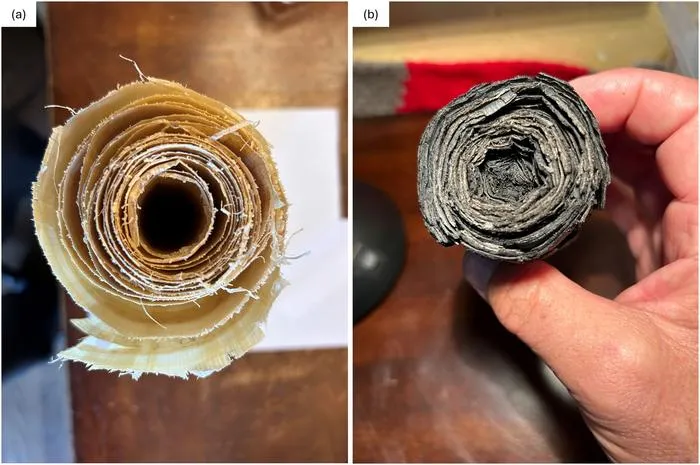
AI and X-ray Imaging Reveal Lost Texts in Ancient Roman Scrolls
AI and x-ray technology enable scientists to virtually read previously unreadable, carbonized Roman scrolls from Herculaneum.

•EurekAlert
AI’s Potential to Expand, Not Shrink, the Clinical Workforce
AI advancements may lead to more, not fewer, healthcare jobs, challenging common fears about workforce reductions in specialties like radiology.