
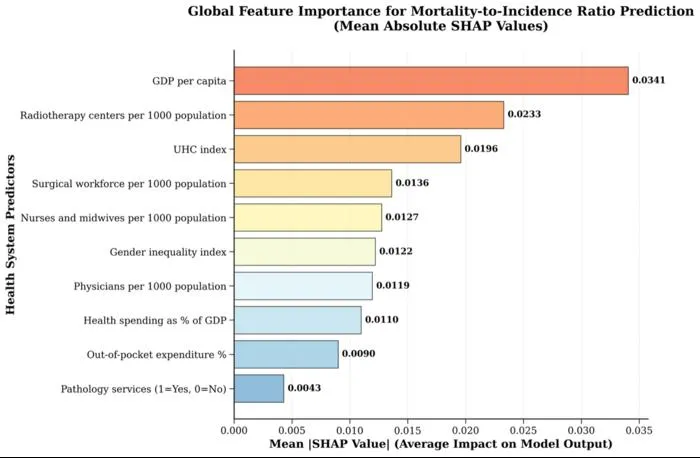
AI-based analysis identifies the most impactful policy and resource factors for improving cancer survival across 185 countries.
Key Details
- 1Researchers used machine learning to analyze cancer incidence and mortality data from 185 countries.
- 2Study incorporated metrics on radiotherapy access, health system structure, and economic indicators.
- 3Radiotherapy access, universal health coverage, and national wealth repeatedly emerged as top factors for improved survival.
- 4The SHAP-based model provides country-specific roadmaps for policy investment priorities.
- 5An interactive tool allows users to view and compare readiness or gaps for their own country.
- 6The study is published in Annals of Oncology (Jan 2026).
Why It Matters
Radiotherapy access is a major imaging-related determinant of cancer outcomes globally; this AI-driven framework offers targeted, actionable guidance to policymakers and health leaders, promising more efficient allocation of imaging and treatment resources.

Source
EurekAlert
Related News
•EurekAlert
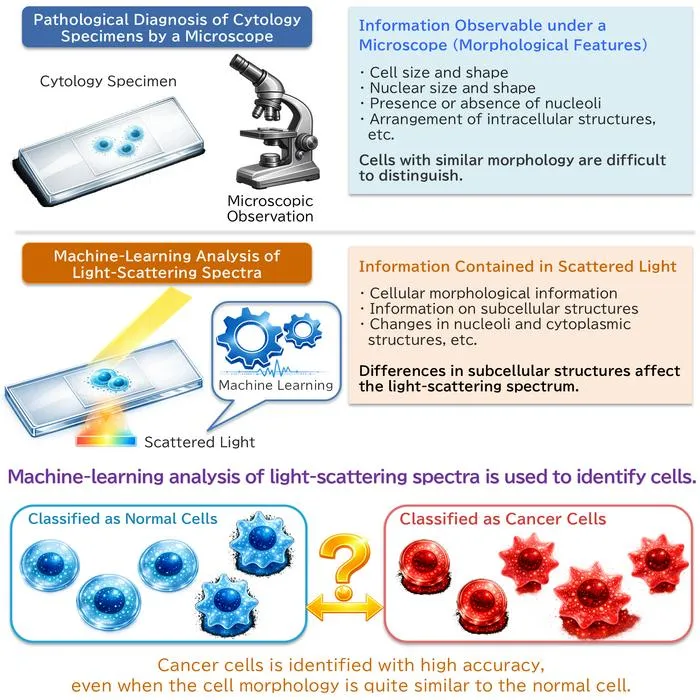
AI System Enhances Cancer Cell Detection via Light Scattering Spectra
Japanese researchers developed an AI system using light scattering spectra to improve cancer cell identification in cytology.
•EurekAlert
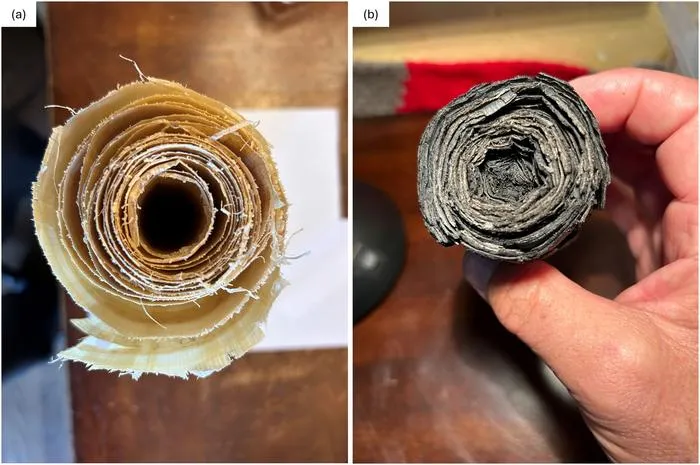
AI and X-ray Imaging Reveal Lost Texts in Ancient Roman Scrolls
AI and x-ray technology enable scientists to virtually read previously unreadable, carbonized Roman scrolls from Herculaneum.

•EurekAlert
AI’s Potential to Expand, Not Shrink, the Clinical Workforce
AI advancements may lead to more, not fewer, healthcare jobs, challenging common fears about workforce reductions in specialties like radiology.