
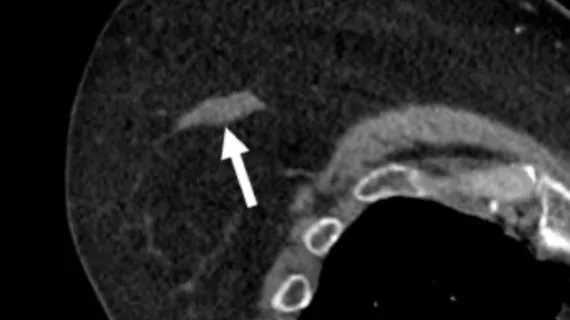
AI systems detect twice as many incidental breast lesions on routine CT scans as radiologists.
Key Details
- 1AI algorithms identified twice the number of incidental breast lesions compared to radiologists.
- 2Incidental breast lesions are detected on up to 8% of CT scans including the chest, potentially higher.
- 3Up to 70% of these incidental lesions turn out to be cancerous, highlighting the importance of early detection.
- 4Challenges for radiologists include lower spatial and contrast resolution of CT compared to mammography and MRI, and lesion location or incidental nature.
- 5Findings are from a new paper published in Current Problems in Diagnostic Radiology.
Why It Matters
Early and more frequent detection of incidental breast cancers on routine CT has significant potential to improve patient outcomes. Increasing AI support in imaging workflows could address current blind spots and enhance secondary cancer detection, reducing missed diagnoses.
Source
Health Imaging
Related News

•Radiology Business
Meta Funds Ohio State’s Radiology AI Innovation Projects
Meta will fund Ohio State researchers to explore AI-driven advancements in radiology, including chest X-ray reporting and disease prediction.
•AuntMinnie
ChatGPT-5 Performs Poorly at Detecting Distal Radius Fractures on X-rays
ChatGPT-5 missed about half of distal radius fractures on x-rays, showing limited diagnostic capability in a real-world scenario.
•AuntMinnie
AI Triage Tool Speeds Up ICH Head CT Turnaround in ED
AI-based triage for intracranial hemorrhage on head CT reduced emergency department report turnaround by 13 minutes.