
Researchers created AI models to generate synthetic early-stage PDAC CT scans, boosting early tumor detection sensitivity.
Key Details
- 1Johns Hopkins team developed 'Time Machine' generative models for PDAC using 3,144 contrast-enhanced CT scans.
- 2Dataset included 2,098 annotated PDAC cases (categorized by tumor stage) and 1,046 normal controls.
- 3AI method synthesized realistic early-stage CTs from late-stage data to address scarcity of real early-stage scans.
- 4Model improved detection sensitivity for tumors <2 cm by 6% versus using only real data.
- 5In prediagnostic cases, the AI achieved 36.8% sensitivity where radiologists missed 100% of tumors in original reads.
Why It Matters
This approach could help overcome the major bottleneck of limited early-stage cancer data, enabling earlier and more sensitive PDAC detection by AI tools. If validated externally, it may lead to improved survival through earlier intervention in pancreatic cancer, a disease notoriously difficult to catch early.

Source
AuntMinnie
Related News
•Radiology Business
Real-World Study: Radiology AI Best in Emergency and Inpatient Settings
A commercial AI tool for intracranial aneurysm detection outperformed in inpatient and emergency settings but yielded limited benefits for outpatients in a major health system study.

•Radiology Business
New Rubric Enhances Safety of AI-Generated Radiology Summaries
Researchers developed a five-factor rubric to assess the safety and quality of AI-generated, patient-friendly radiology report summaries.
•Radiology Business
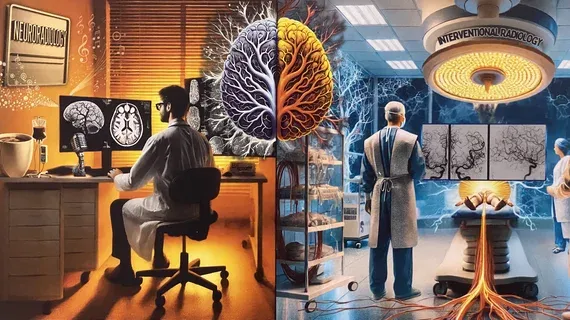
Healthcare Leader Warns AI Will Dominate Diagnostic Radiology
A leading oncologist urges future radiologists to specialize in interventional procedures due to AI advances in image interpretation.