
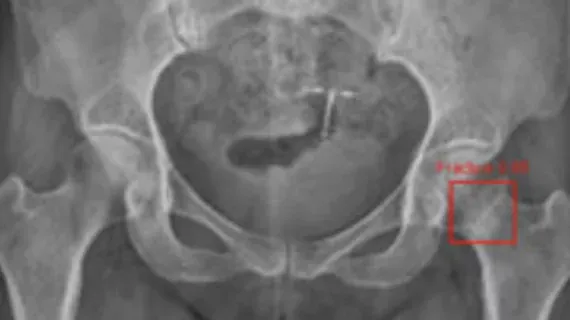
A new AI model outperformed radiologists in identifying difficult-to-detect femoral neck fractures on radiographs.
Key Details
- 1The AI tool, OccuNet, was trained and validated to detect femoral neck fractures, a challenging diagnostic area for radiologists.
- 2OccuNet uses a two-stage approach: contrastive pre-training on paired original and artifact-augmented radiographs, followed by fracture detection fine-tuning.
- 3The model was tested on a cohort of 2,576 adults with suspected hip trauma across four hospitals.
- 4Studies indicate that up to 10% of femoral neck fractures can be missed on initial radiographs, leading to delayed treatment and complications.
- 5The study was published in RSNA’s journal Radiology and involved experts from the Zhejiang Spine Research Center, China.
Why It Matters
Missed or indeterminate hip fractures can result in significant patient harm, so an AI model offering improved sensitivity and performance offers a valuable safety net. Such AI tools could enhance diagnostic accuracy, reduce missed injuries, and potentially improve patient outcomes in emergency radiology settings.

Source
Radiology Business
Related News
•Cardiovascular Business
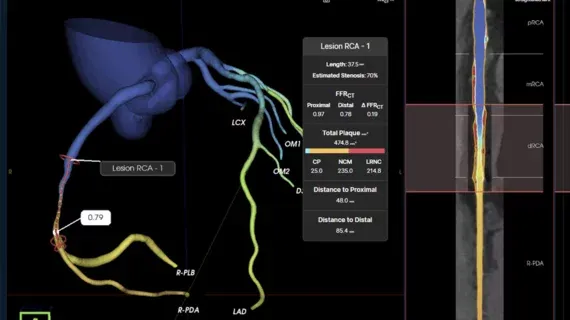
FDA Clears Elucid's AI-Driven FFR-CT Solution for Cardiac Imaging
Elucid's FFR-IQ, an AI-powered noninvasive FFR-CT tool, receives FDA clearance for clinical use.
•Radiology Business
New AI Flags Uncertainty in Breast Cancer Imaging Predictions
University of Pittsburgh researchers developed an AI model that quantifies uncertainty in breast cancer diagnostic predictions to enhance trustworthiness.

•Radiology Business
FDA Approves SimBioSys AI Tool for Breast Cancer Risk via MRI
SimBioSys received FDA clearance for TumorSight Risk, an AI tool assessing breast cancer recurrence risk using MRI.