
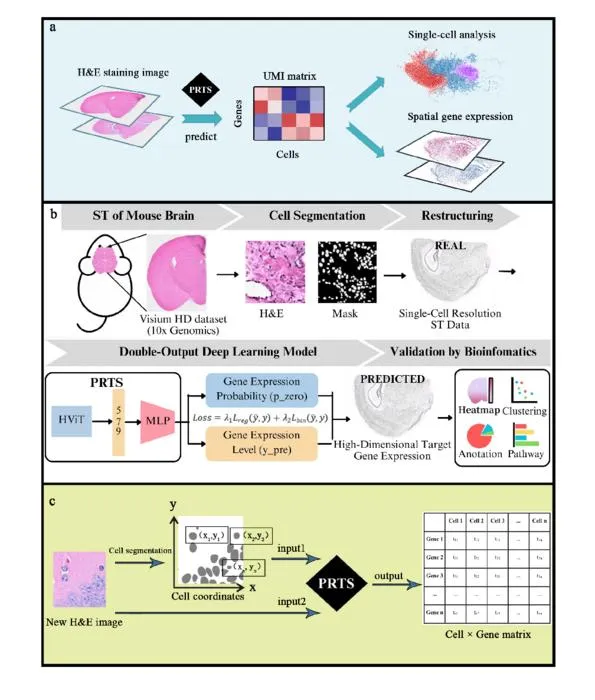
Researchers developed PRTS, a deep learning model that infers single-cell spatial transcriptomics from standard H&E-stained tissue images.
Key Details
- 1PRTS stands for Pathology-driven Reconstruction of Transcriptomic States.
- 2It predicts an expression matrix for 1,820 genes at single-cell resolution from H&E images.
- 3The method provides 27x higher resolution than traditional spatial transcriptomics spot technologies.
- 4Validated on mouse brain, human lung cancer, and breast cancer datasets.
- 5PRTS identified 21 cell subtypes and matched key gene expression patterns to ground truth.
- 6Potential applications include diagnostics, cancer subtyping, and drug discovery.
Why It Matters
PRTS could enable cost-effective, scalable spatial transcriptomics directly from routinely collected pathology slides, advancing both research and diagnostics where gene expression mapping was previously prohibitively expensive or impractical.

Source
EurekAlert
Related News
•EurekAlert
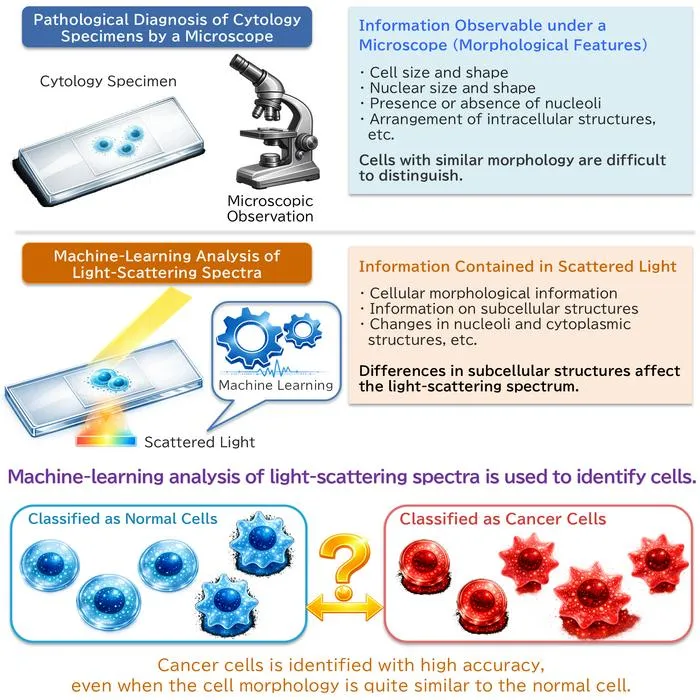
AI System Enhances Cancer Cell Detection via Light Scattering Spectra
Japanese researchers developed an AI system using light scattering spectra to improve cancer cell identification in cytology.
•EurekAlert
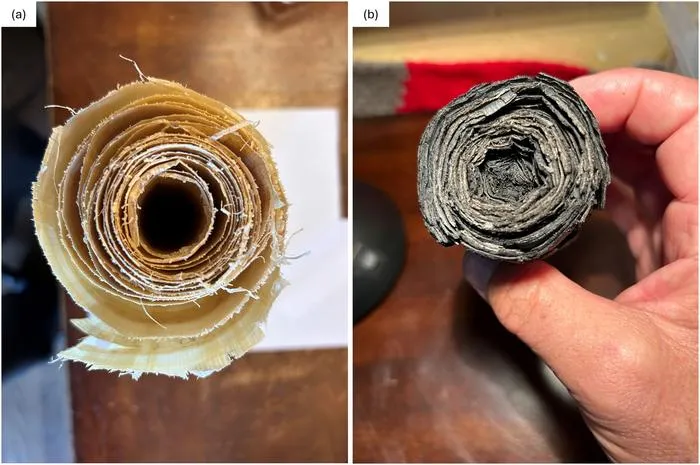
AI and X-ray Imaging Reveal Lost Texts in Ancient Roman Scrolls
AI and x-ray technology enable scientists to virtually read previously unreadable, carbonized Roman scrolls from Herculaneum.

•EurekAlert
AI’s Potential to Expand, Not Shrink, the Clinical Workforce
AI advancements may lead to more, not fewer, healthcare jobs, challenging common fears about workforce reductions in specialties like radiology.