

A new generative AI model predicts the risk and timing of over 1,000 diseases using large-scale health record data from the UK and Denmark.
Key Details
- 1The model was trained on anonymised data from 400,000 UK Biobank participants and validated on 1.9 million Danish registry patients.
- 2It leverages generative transformer techniques similar to those in large language models to process health event sequences.
- 3Excels at forecasting diseases with clear progression patterns (e.g., heart attacks, cancer); less effective for variable conditions.
- 4Produces probabilistic, population-level risk estimates rather than individual certainties; shorter-term forecasts are more reliable.
- 5Underrepresents childhood/adolescent events and some ethnic groups due to training data limitations.
- 6Not yet ready for clinical use, but helps study disease progression and simulate outcomes for research.
Why It Matters
This research demonstrates the growing potential of AI to model disease trajectories at scale, paving the way for more preventive, personalized medicine. While not clinic-ready, such approaches could support risk stratification, resource planning, and ultimately improve patient outcomes in radiology and beyond.

Source
EurekAlert
Related News
•EurekAlert
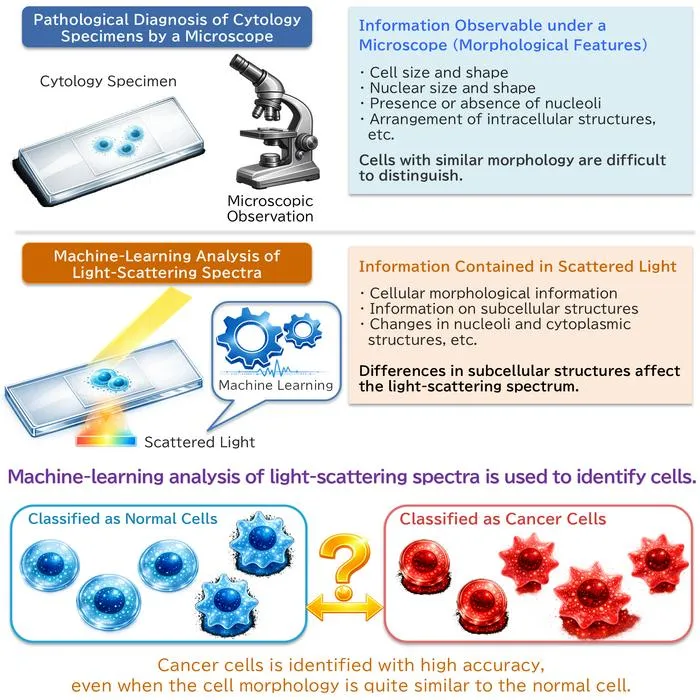
AI System Enhances Cancer Cell Detection via Light Scattering Spectra
Japanese researchers developed an AI system using light scattering spectra to improve cancer cell identification in cytology.

•EurekAlert
AI and X-ray Imaging Reveal Lost Texts in Ancient Roman Scrolls
AI and x-ray technology enable scientists to virtually read previously unreadable, carbonized Roman scrolls from Herculaneum.

•EurekAlert
AI’s Potential to Expand, Not Shrink, the Clinical Workforce
AI advancements may lead to more, not fewer, healthcare jobs, challenging common fears about workforce reductions in specialties like radiology.