
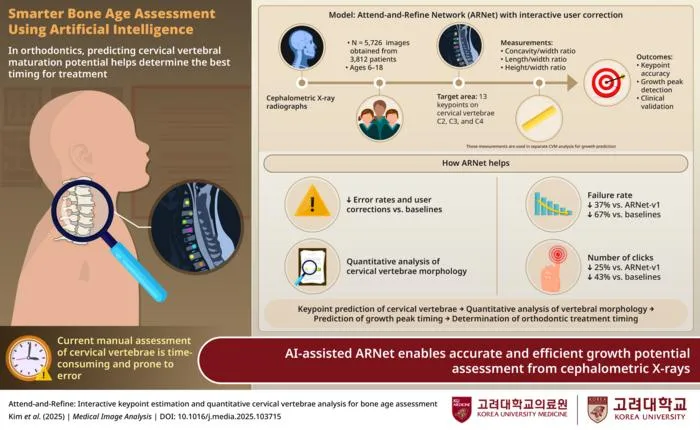
Korean researchers developed an AI system (ARNet-v2) that predicts children's growth spurts from neck X-rays to enhance orthodontic treatment planning.
Key Details
- 1ARNet-v2 uses lateral cephalometric radiographs to identify cervical vertebrae keypoints.
- 2The model allows a single clinician correction to propagate, boosting efficiency and accuracy.
- 3Tested on 5,700+ radiographs and across four public datasets, ARNet-v2 reduced prediction failures by up to 67%.
- 4Manual annotation requirements are halved compared to conventional approaches.
- 5The AI may reduce the need for additional hand–wrist X-rays, lowering radiation exposure for pediatric patients.
- 6Published in Medical Image Analysis, July 2025.
Why It Matters
This model offers significant efficiency and diagnostic accuracy improvements for pediatric orthodontics, potentially lowering cost and radiation exposure for young patients. Its success could pave the way for further AI integration in radiology workflows and broader medical imaging challenges.

Source
EurekAlert
Related News
•EurekAlert
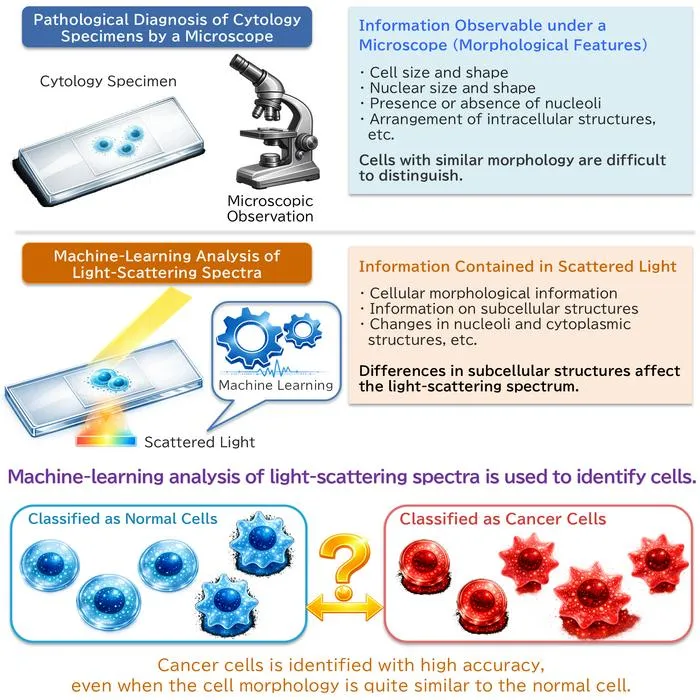
AI System Enhances Cancer Cell Detection via Light Scattering Spectra
Japanese researchers developed an AI system using light scattering spectra to improve cancer cell identification in cytology.
•EurekAlert
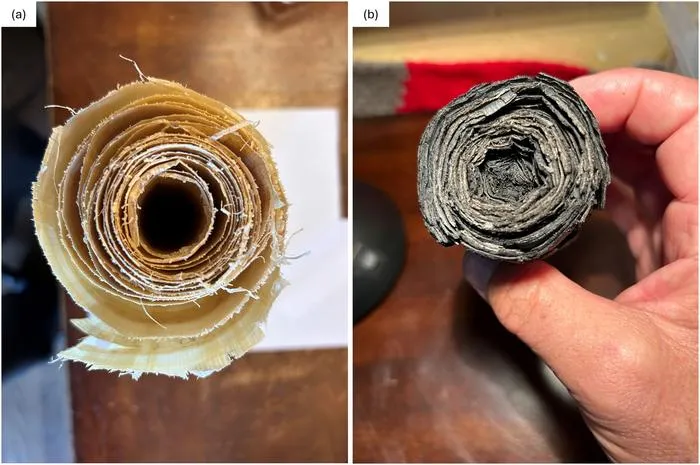
AI and X-ray Imaging Reveal Lost Texts in Ancient Roman Scrolls
AI and x-ray technology enable scientists to virtually read previously unreadable, carbonized Roman scrolls from Herculaneum.

•EurekAlert
AI’s Potential to Expand, Not Shrink, the Clinical Workforce
AI advancements may lead to more, not fewer, healthcare jobs, challenging common fears about workforce reductions in specialties like radiology.