
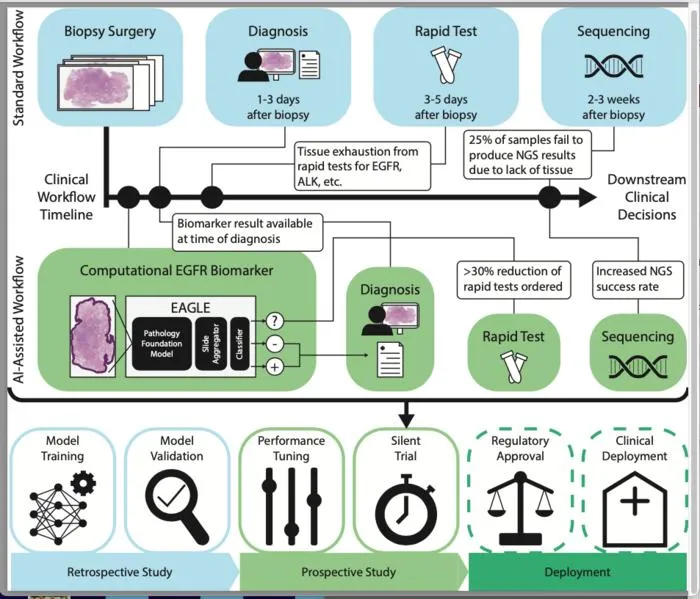
An AI model can accurately flag EGFR mutations in lung adenocarcinoma using routine pathology slides, reducing the need for rapid genetic tests.
Key Details
- 1Researchers from Mount Sinai, Memorial Sloan Kettering, and collaborators published results in Nature Medicine on July 9, 2025.
- 2The AI model predicts EGFR mutations from H&E-stained pathology slides of lung adenocarcinoma.
- 3A live 'silent trial' at Memorial Sloan Kettering showed the model could reduce rapid genetic testing by over 40%.
- 4The model was trained and validated on the largest multi-institutional dataset of matched slides and sequencing results from the US and Europe.
- 5Preserving tissue by avoiding unnecessary rapid tests allows for more comprehensive genomic sequencing.
- 6Work is ongoing to broaden the model's biomarker detection and deploy it in more healthcare settings.
Why It Matters
This study demonstrates the practical integration of AI in pathology workflows, expediting precision therapy decisions and optimizing tissue usage in lung cancer diagnostics. It signals a major step toward AI-driven personalization in oncology, with potential to improve both efficiency and patient outcomes.

Source
EurekAlert
Related News
•EurekAlert
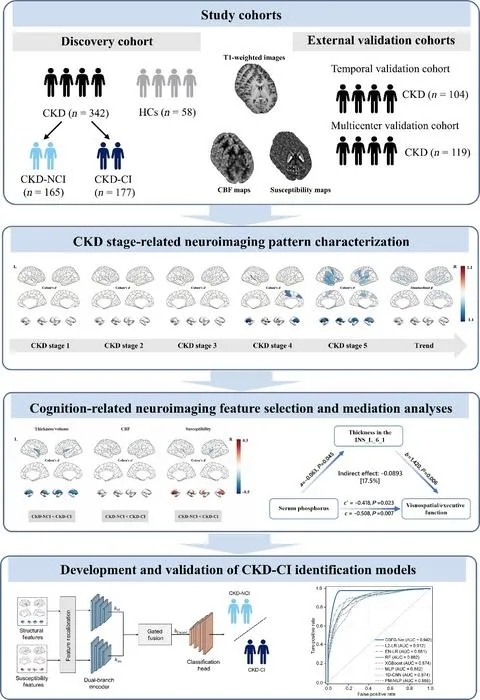
Deep Learning and MRI Identify Cognitive Impairment in CKD Patients
Researchers used multimodal MRI and a novel deep learning model to identify cognitive impairment in chronic kidney disease patients with strong validation.
•EurekAlert
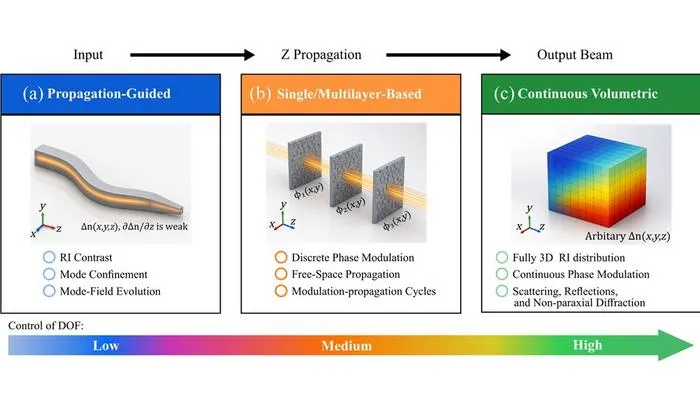
Advances in 3D-Printed Devices for Structured-Light Imaging
Researchers review femtosecond laser 3D microfabrication for integrated structured-light optical devices.

•EurekAlert
HKU Unveils X-ray Telescope and AI Innovations at InnoCarnival 2026
Hong Kong University showcases an X-ray telescope and AI-powered health technologies at InnoCarnival 2026.