
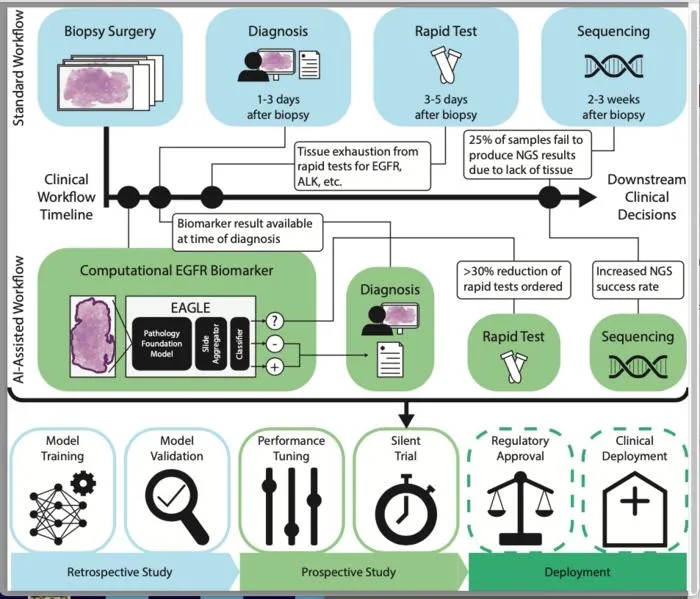
An AI model can accurately flag EGFR mutations in lung adenocarcinoma using routine pathology slides, reducing the need for rapid genetic tests.
Key Details
- 1Researchers from Mount Sinai, Memorial Sloan Kettering, and collaborators published results in Nature Medicine on July 9, 2025.
- 2The AI model predicts EGFR mutations from H&E-stained pathology slides of lung adenocarcinoma.
- 3A live 'silent trial' at Memorial Sloan Kettering showed the model could reduce rapid genetic testing by over 40%.
- 4The model was trained and validated on the largest multi-institutional dataset of matched slides and sequencing results from the US and Europe.
- 5Preserving tissue by avoiding unnecessary rapid tests allows for more comprehensive genomic sequencing.
- 6Work is ongoing to broaden the model's biomarker detection and deploy it in more healthcare settings.
Why It Matters
This study demonstrates the practical integration of AI in pathology workflows, expediting precision therapy decisions and optimizing tissue usage in lung cancer diagnostics. It signals a major step toward AI-driven personalization in oncology, with potential to improve both efficiency and patient outcomes.

Source
EurekAlert
Related News
•EurekAlert
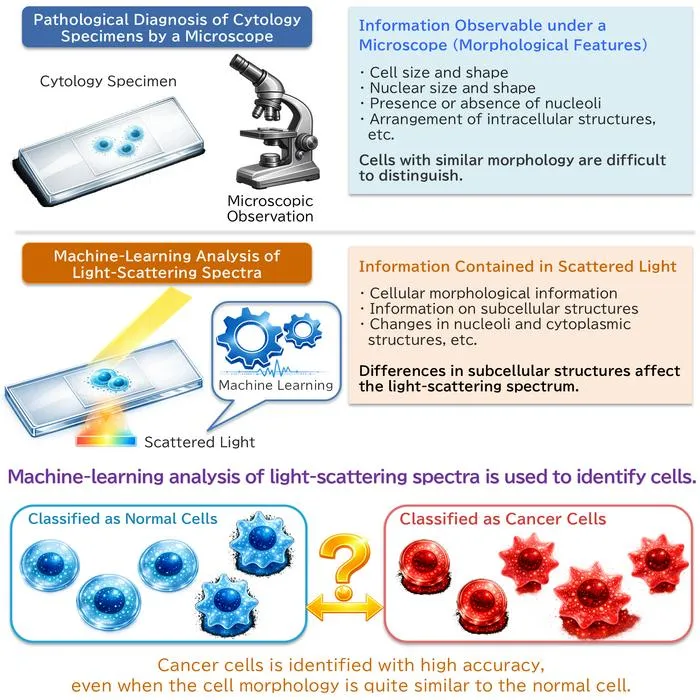
AI System Enhances Cancer Cell Detection via Light Scattering Spectra
Japanese researchers developed an AI system using light scattering spectra to improve cancer cell identification in cytology.
•EurekAlert
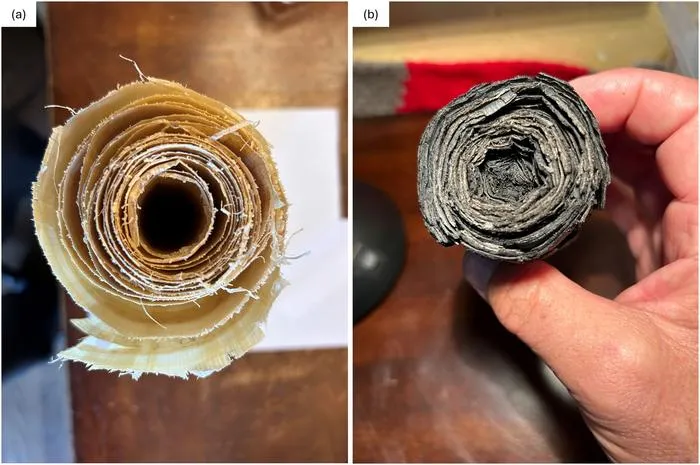
AI and X-ray Imaging Reveal Lost Texts in Ancient Roman Scrolls
AI and x-ray technology enable scientists to virtually read previously unreadable, carbonized Roman scrolls from Herculaneum.

•EurekAlert
AI’s Potential to Expand, Not Shrink, the Clinical Workforce
AI advancements may lead to more, not fewer, healthcare jobs, challenging common fears about workforce reductions in specialties like radiology.