
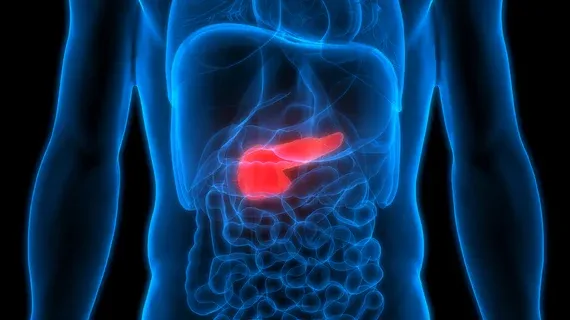
REMOD, a new AI model, detects pancreatic cancer on CT scans much earlier and more accurately than radiologists.
Key Details
- 1The AI model, REDMOD, was trained to identify radiomic signatures of pre-diagnostic pancreatic ductal adenocarcinoma (PDAC) on CT scans.
- 2It was trained with imaging data from multiple institutions and developed a 40-feature radiomic signature.
- 3Tested on over 200 abdominal CT scans from patients later diagnosed with PDAC despite no initial radiologist findings.
- 4REMOD detected pancreatic cancer on average 475 days before clinical diagnosis.
- 5The model achieved nearly 75% sensitivity, about twice as high as radiologists' sensitivity.
- 6At a 24-month prediction window, REDMOD's sensitivity was triple that of radiologists.
Why It Matters
Early detection of pancreatic cancer is vital due to its poor prognosis when caught late. AI advancements like REDMOD could revolutionize detection efficacy, potentially improving survival rates and demonstrating the impact of imaging AI in clinical practice.

Source
Radiology Business
Related News

•Radiology Business
Meta Funds Ohio State’s Radiology AI Innovation Projects
Meta will fund Ohio State researchers to explore AI-driven advancements in radiology, including chest X-ray reporting and disease prediction.

•AuntMinnie
ChatGPT-5 Performs Poorly at Detecting Distal Radius Fractures on X-rays
ChatGPT-5 missed about half of distal radius fractures on x-rays, showing limited diagnostic capability in a real-world scenario.
•AuntMinnie
AI Triage Tool Speeds Up ICH Head CT Turnaround in ED
AI-based triage for intracranial hemorrhage on head CT reduced emergency department report turnaround by 13 minutes.