
A refined AI tool using facial landmark detection improves the objective evaluation of facial palsy severity in clinical videos.
Key Details
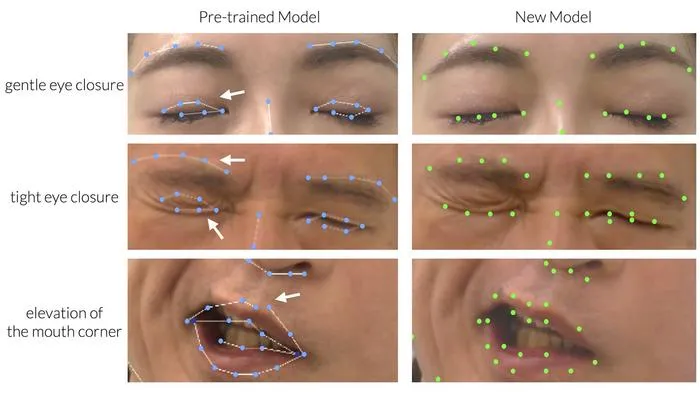
- 1Researchers fine-tuned a facial recognition AI model (3D-FAN) for patients with facial palsy using 1,181 images from 196 patients.
- 2Manual annotation of facial keypoints improved the model's accuracy, particularly for eyelids and mouth asymmetry.
- 3The refined tool showed lower error rates in keypoint detection compared to baseline models trained on healthy faces.
- 4Objective ratings from the model may aid treatment planning and outcome assessments.
- 5Authors plan to make the AI model freely available for wider clinical and research use.
Why It Matters
Objective and automated evaluation tools for facial palsy can standardize assessments and improve outcomes, demonstrating a valuable extension of imaging AI in clinical neurology and surgery. Sharing these tools openly can accelerate research and adoption for other rare disorders as well.

Source
EurekAlert
Related News

•EurekAlert
AI System Enhances Cancer Cell Detection via Light Scattering Spectra
Japanese researchers developed an AI system using light scattering spectra to improve cancer cell identification in cytology.

•EurekAlert
AI and X-ray Imaging Reveal Lost Texts in Ancient Roman Scrolls
AI and x-ray technology enable scientists to virtually read previously unreadable, carbonized Roman scrolls from Herculaneum.

•EurekAlert
AI’s Potential to Expand, Not Shrink, the Clinical Workforce
AI advancements may lead to more, not fewer, healthcare jobs, challenging common fears about workforce reductions in specialties like radiology.