
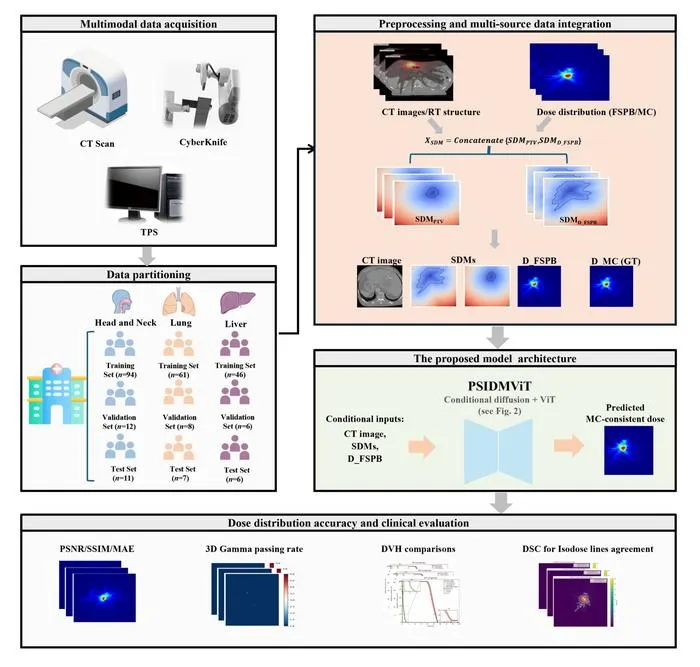
A physics- and spatially informed diffusion model accelerates Monte Carlo–level dose estimation for CyberKnife radiotherapy using planning CT and anatomical data.
Key Details
- 1The PSIDMViT model integrates planning CT, finite-size pencil beam dose distributions, and distance maps for dose prediction.
- 2Tested retrospectively in 251 CyberKnife patients (117 head-and-neck, 76 lung, 58 liver).
- 3Achieved 3D Gamma passing rates of 98.0% for head-and-neck, 94.0% for lung, and 95.0% for liver cases (1%/1 mm/10% criterion).
- 4Reduced dose computation time from about 1 hour to 18 minutes per plan versus Monte Carlo methods.
- 5Outperformed conventional finite-size pencil beam and baseline deep-learning models in accuracy.
- 6External and multi-institutional validation remains needed.
Why It Matters
Fast, Monte Carlo–consistent dose prediction can make accurate, individualized radiotherapy planning more feasible in clinical routine, improving workflow efficiency for high-precision treatments. This approach illustrates how integrating imaging, physics, and AI can address major clinical bottlenecks.

Source
EurekAlert
Related News
•EurekAlert
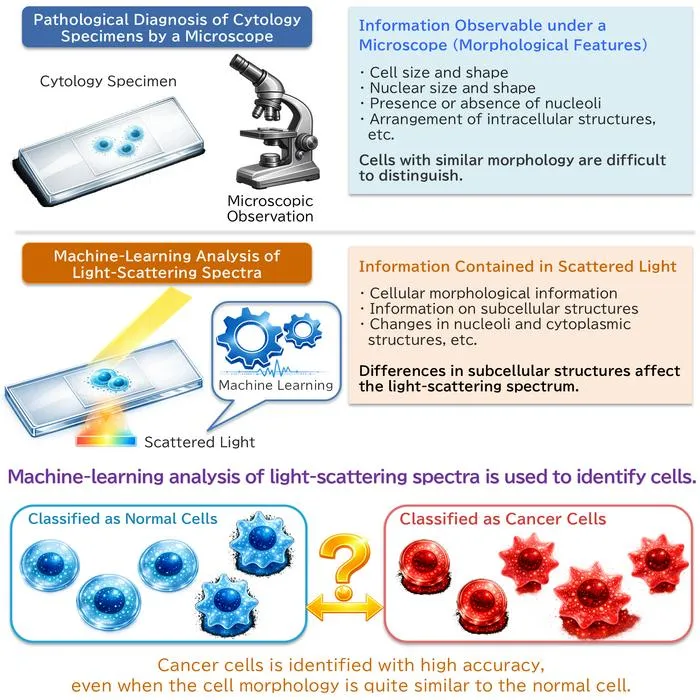
AI System Enhances Cancer Cell Detection via Light Scattering Spectra
Japanese researchers developed an AI system using light scattering spectra to improve cancer cell identification in cytology.
•EurekAlert
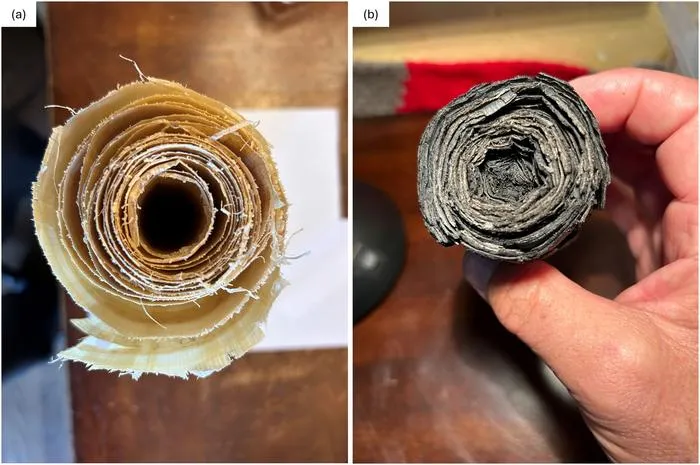
AI and X-ray Imaging Reveal Lost Texts in Ancient Roman Scrolls
AI and x-ray technology enable scientists to virtually read previously unreadable, carbonized Roman scrolls from Herculaneum.

•EurekAlert
AI’s Potential to Expand, Not Shrink, the Clinical Workforce
AI advancements may lead to more, not fewer, healthcare jobs, challenging common fears about workforce reductions in specialties like radiology.