
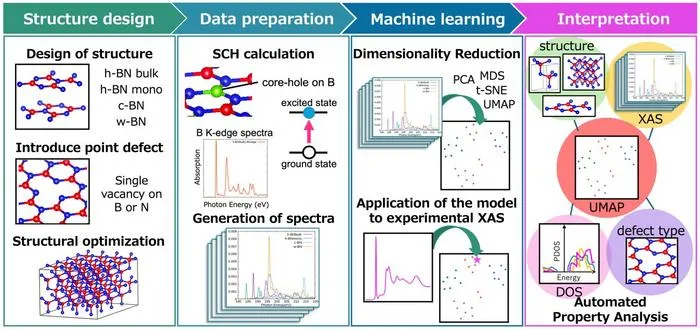
Researchers have developed an AI-based approach to automate and enhance the analysis of X-ray absorption spectroscopy (XAS) data for materials science.
Key Details
- 1X-ray absorption spectroscopy (XAS) is critical for determining materials’ properties but is traditionally labor-intensive and requires expertise.
- 2A Tokyo University of Science team applied machine learning, especially UMAP, to automate analysis and classification of XAS data.
- 3UMAP outperformed other dimensionality reduction techniques in accurately identifying boron nitride structures and defects.
- 4The AI-based system proved robust against real-world noise in experimental XAS data and offers higher accuracy than prior statistical approaches.
- 5The method is being deployed at the Nano-Terasu synchrotron radiation center and is expected to accelerate material design.
Why It Matters
Automating XAS analysis with AI can dramatically speed up and objectify material characterization and design, potentially influencing imaging physics, research, and advanced imaging informatics. This approach demonstrates a broader application of AI to complex imaging data, which could cross-inform developments in radiology AI.

Source
EurekAlert
Related News
•EurekAlert
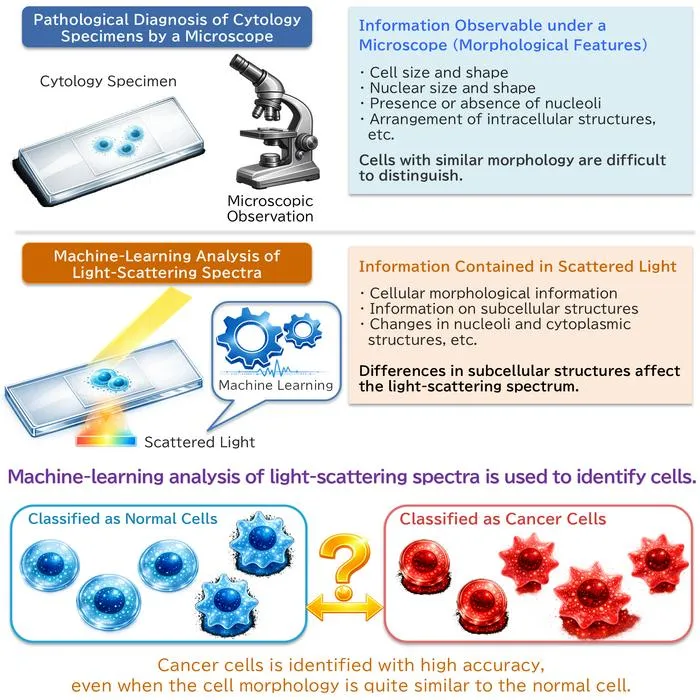
AI System Enhances Cancer Cell Detection via Light Scattering Spectra
Japanese researchers developed an AI system using light scattering spectra to improve cancer cell identification in cytology.
•EurekAlert
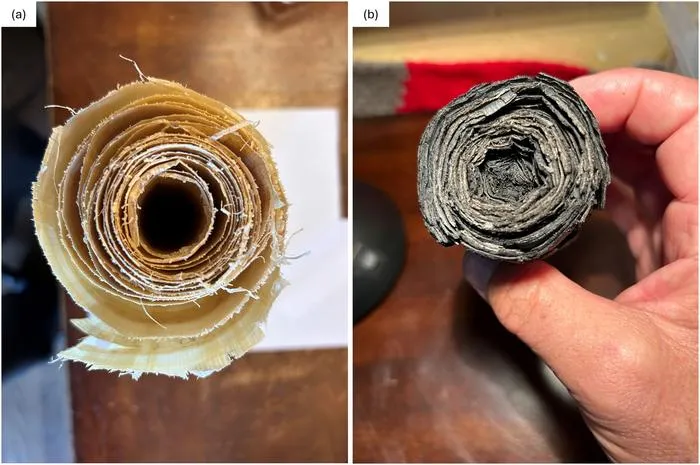
AI and X-ray Imaging Reveal Lost Texts in Ancient Roman Scrolls
AI and x-ray technology enable scientists to virtually read previously unreadable, carbonized Roman scrolls from Herculaneum.

•EurekAlert
AI’s Potential to Expand, Not Shrink, the Clinical Workforce
AI advancements may lead to more, not fewer, healthcare jobs, challenging common fears about workforce reductions in specialties like radiology.