
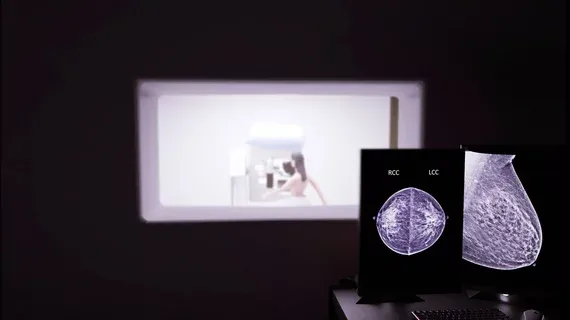
AI assistance enhances radiologists' breast cancer detection performance and directs attention to critical regions in mammograms.
Key Details
- 1Study included 12 breast imaging radiologists with 4–32 years’ experience from 10 institutions.
- 2150 mammography exams were analyzed (75 positive for cancer, 75 negative).
- 3With AI, average AUC improved from 0.93 to 0.97 (p<0.001); sensitivity increased from 81.7% to 87.2%.
- 4Radiologists spent more fixation time on lesion regions (5.4s with AI vs 4.4s) and covered less of the whole breast (9.5% vs 11.1%).
- 5No significant increase in reading time was found with AI support (30.8s with AI vs 29.4s).
- 6The study used Transpara (ScreenPoint Medical) as the AI tool; further research underway on timing and selective use of AI in practice.
Why It Matters
This research demonstrates how AI decision support can improve interpretive accuracy and efficiency in breast imaging, validating the role of AI as an effective adjunct in screening mammography workflows. Ongoing work aims to optimize AI presentation to avoid automation bias and maximize benefit.

Source
AuntMinnie
Related News
•Radiology Business
New AI Flags Uncertainty in Breast Cancer Imaging Predictions
University of Pittsburgh researchers developed an AI model that quantifies uncertainty in breast cancer diagnostic predictions to enhance trustworthiness.

•AuntMinnie
LLMs Rarely Recommend Unnecessary Imaging, Except for Thyroid Ultrasound
Large language models seldom over-recommend imaging, but thyroid ultrasound guidance shows substantial discrepancies.
•Radiology Business
UC Irvine Implements AI to Find Lung Cancer Screening Candidates
UC Irvine's radiology department developed an NLP tool to identify patients eligible for lung cancer screening from EHR notes.