
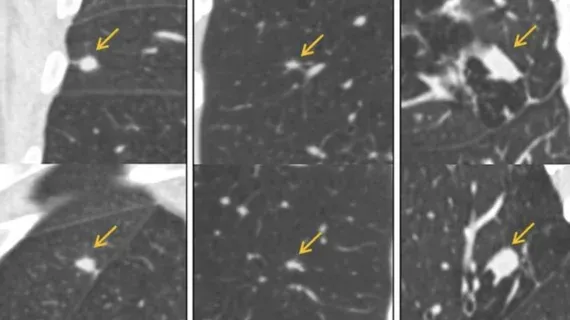
An AI algorithm significantly reduced false positives in lung cancer detection on CT scans, according to international multi-site research.
Key Details
- 1Study published in 'Radiology' evaluated an AI model for lung nodule assessment.
- 2AI was trained on over 16,000 nodules from the National Lung Screening Trial.
- 3Validation used CT datasets from three additional European screening trials.
- 4The algorithm was tested on data from more than 4,000 participants and nearly 8,000 nodules.
- 5Results showed the AI nearly halved the rate of false positives in lung cancer detection.
Why It Matters
Reducing false positives could decrease unnecessary procedures, lower healthcare costs, and reduce patient anxiety. Robust multi-site validation of AI models is crucial for their adoption in clinical lung cancer screening workflows.
Source
Health Imaging
Related News

•Radiology Business
Real-World Study: Radiology AI Best in Emergency and Inpatient Settings
A commercial AI tool for intracranial aneurysm detection outperformed in inpatient and emergency settings but yielded limited benefits for outpatients in a major health system study.

•Radiology Business
New Rubric Enhances Safety of AI-Generated Radiology Summaries
Researchers developed a five-factor rubric to assess the safety and quality of AI-generated, patient-friendly radiology report summaries.

•Radiology Business
Healthcare Leader Warns AI Will Dominate Diagnostic Radiology
A leading oncologist urges future radiologists to specialize in interventional procedures due to AI advances in image interpretation.