
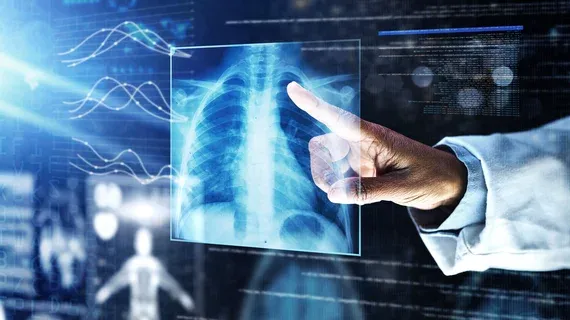
Emory University demonstrated that LLM-based tools can enhance patient comprehension of radiology reports.
Key Details
- 1Emory University's radiology department piloted a web app using OpenAI's GPT-5 to summarize radiology reports for patients.
- 2The system produced LLM-generated report summaries, clickable terms with educational content, and AI-created explanatory videos.
- 3In a study of 100 patients, 48% rated AI report summaries as the most helpful feature.
- 4Patient comprehension scores increased from a median 4/5 before the intervention to 5/5 after using the AI-generated tools.
- 5Summaries required clinician review and editing, averaging 24.75 words removed and 0.13 words added per summary.
- 6Patients voiced reservations about using unedited AI summaries, stressing the need for professional oversight.
Why It Matters
This study demonstrates the potential of AI-driven tools to make complex radiology results more accessible and understandable for patients, but highlights the necessity for clinical oversight to maintain accuracy and patient trust. It supports the case for integrating LLMs into radiological workflows to improve communication, with considerations for scalability and regulation.

Source
Radiology Business
Related News
•Radiology Business
Real-World Study: Radiology AI Best in Emergency and Inpatient Settings
A commercial AI tool for intracranial aneurysm detection outperformed in inpatient and emergency settings but yielded limited benefits for outpatients in a major health system study.

•Radiology Business
New Rubric Enhances Safety of AI-Generated Radiology Summaries
Researchers developed a five-factor rubric to assess the safety and quality of AI-generated, patient-friendly radiology report summaries.
•Radiology Business
AI Model Surpasses Radiologists in Detecting Subtle Hip Fractures
A new AI model outperformed radiologists in identifying difficult-to-detect femoral neck fractures on radiographs.