
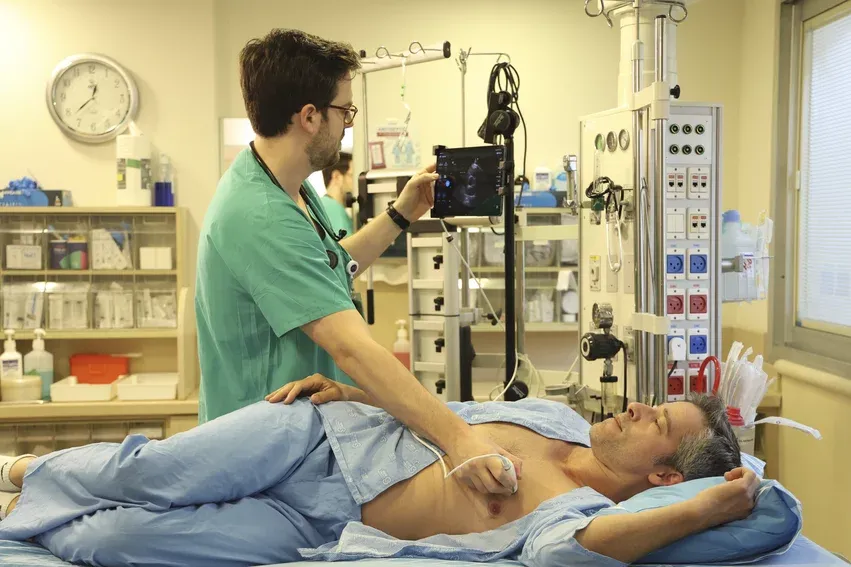
An AI model accurately detects cardiac structural issues using point-of-care ultrasound (POCUS) images, even by non-cardiologists.
Key Details
- 1The AI model was developed through a collaboration between AISAP and Sheba Medical Center.
- 2Training involved over 120,000 annotated transthoracic echocardiograms.
- 3AISAP Cardio, the POCUS platform, is FDA-cleared for automated cardiac measurements.
- 4Retrospective AUCs for key findings: mitral regurgitation (0.883), tricuspid regurgitation (0.913), ventricular dysfunction (0.940), reduced ejection fraction (0.982).
- 5Prospective real-world AUCs: 0.72, 0.87, 0.95, and 0.97 for the same metrics, using data from 200+ patients scanned by non-cardiologists.
Why It Matters
This AI-driven advancement opens opportunities for broader access to accurate cardiac screening at the point of care, enabling non-experts to detect significant heart issues and potentially improving patient outcomes, especially in resource-limited settings.
Source
Cardiovascular Business
Related News
•Radiology Business
Real-World Study: Radiology AI Best in Emergency and Inpatient Settings
A commercial AI tool for intracranial aneurysm detection outperformed in inpatient and emergency settings but yielded limited benefits for outpatients in a major health system study.
•Radiology Business
New Rubric Enhances Safety of AI-Generated Radiology Summaries
Researchers developed a five-factor rubric to assess the safety and quality of AI-generated, patient-friendly radiology report summaries.

•Radiology Business
Epsilon Health Launches With $28M to Build 'AI-Native' Imaging Practice
Epsilon Health has exited stealth mode, raising nearly $28M to launch an 'AI-native' radiology imaging group aimed at addressing the U.S. radiologist shortage.