
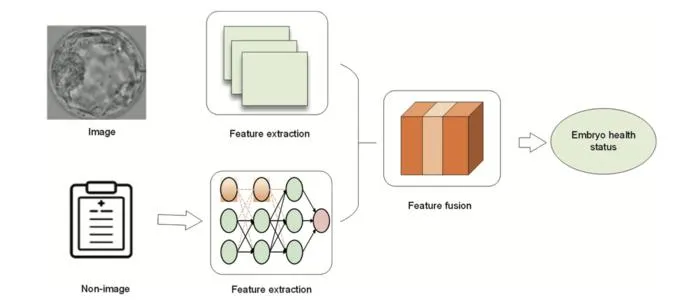
Artificial intelligence-driven tools are improving embryo selection for IVF by making health assessment more consistent and precise.
Key Details
- 1Approximately 17.5% of adult couples globally are affected by infertility, with IVF success rates averaging around 30%.
- 2Traditional embryo health assessments in IVF rely on subjective visual evaluations by embryologists.
- 3Recent AI advances enable automated analysis of embryo morphology images, reducing subjectivity and improving consistency.
- 4AI-driven approaches include deep learning applied to early, blastocyst, and full developmental stages using multimodal data.
- 5The review analyzed 37 studies and found AI often outperformed manual assessments in accuracy and efficiency.
- 6Challenges discussed include clinical integration, data quality, and ethical considerations.
Why It Matters
AI tools in embryo imaging can standardize and improve IVF outcomes, minimizing variability between embryologists. The findings underscore the potential for imaging AI to set new benchmarks for precision and reliability in reproductive medicine.

Source
EurekAlert
Related News

•EurekAlert
AI System Enhances Cancer Cell Detection via Light Scattering Spectra
Japanese researchers developed an AI system using light scattering spectra to improve cancer cell identification in cytology.
•EurekAlert
AI and X-ray Imaging Reveal Lost Texts in Ancient Roman Scrolls
AI and x-ray technology enable scientists to virtually read previously unreadable, carbonized Roman scrolls from Herculaneum.

•EurekAlert
AI’s Potential to Expand, Not Shrink, the Clinical Workforce
AI advancements may lead to more, not fewer, healthcare jobs, challenging common fears about workforce reductions in specialties like radiology.