
Mount Sinai researchers show that deep learning applied to ECGs can detect COPD early and accurately across diverse populations.
Key Details
- 1Study analyzed over 208,000 ECGs from more than 18,000 COPD cases and 49,000 matched controls spanning 2006-2023.
- 2A convolutional neural network achieved AUC 0.80 (internal), 0.82 (external validation), and 0.75 (UK Biobank).
- 3Model explainability linked predictions to clinically relevant ECG features (notably P-wave changes).
- 4Validation included distinct hospitals in New York City and patients from the UK Biobank.
- 5ECG-based AI tool uses standard 10-second, 12-lead data, enabling scalability and low cost for broad COPD screening.
Why It Matters
This work demonstrates that AI-driven ECG interpretation can provide scalable, non-invasive early detection for COPD, a major global health burden. Such AI models could expand access to screening in resource-limited settings, improving patient outcomes through earlier intervention.

Source
EurekAlert
Related News
•EurekAlert
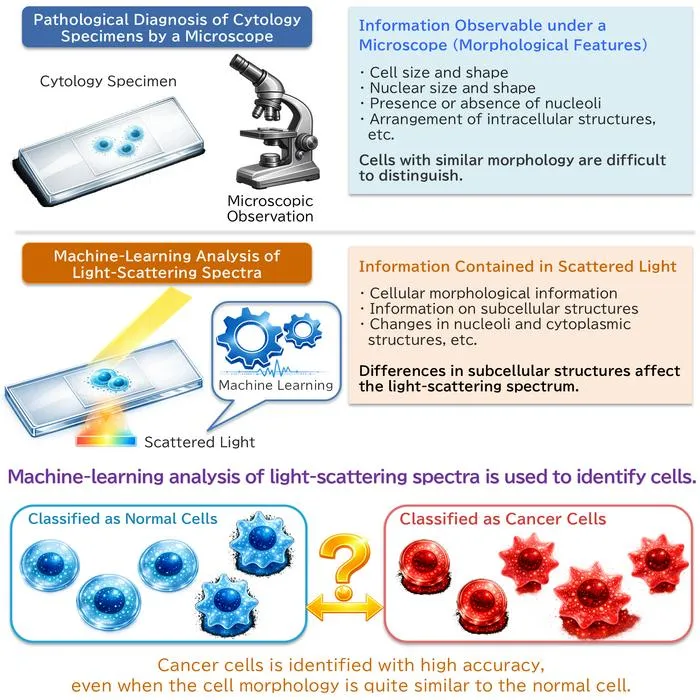
AI System Enhances Cancer Cell Detection via Light Scattering Spectra
Japanese researchers developed an AI system using light scattering spectra to improve cancer cell identification in cytology.

•EurekAlert
AI and X-ray Imaging Reveal Lost Texts in Ancient Roman Scrolls
AI and x-ray technology enable scientists to virtually read previously unreadable, carbonized Roman scrolls from Herculaneum.

•EurekAlert
AI’s Potential to Expand, Not Shrink, the Clinical Workforce
AI advancements may lead to more, not fewer, healthcare jobs, challenging common fears about workforce reductions in specialties like radiology.