
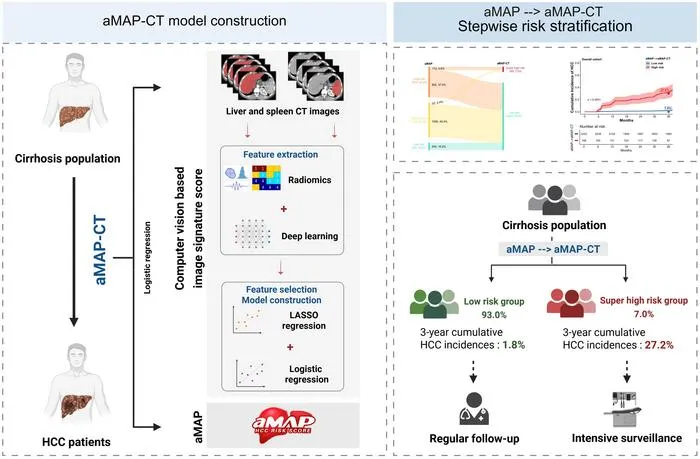
Combining CT-based radiomics and deep learning features with clinical data enhances prediction of hepatocellular carcinoma risk in cirrhosis patients.
Key Details
- 1Study used a multicenter, prospective cohort of 2,411 cirrhosis patients in China (2018–2023).
- 2All patients underwent 3-phase contrast-enhanced abdominal CT at baseline.
- 3AI model extracted radiomics (PyRadiomics) and deep learning (ResNet-18) features from liver and spleen on CT.
- 4The integrated aMAP-CT model significantly outperformed standard clinical models (AUC 0.809–0.869).
- 5Model stratified patients into high- (26.3% incidence) and low-risk (1.7%) groups over three years.
- 6Stepwise application identified 7% of patients at very high risk for HCC (27.2% three-year incidence).
Why It Matters
This study demonstrates how AI-driven analysis of imaging data can meaningfully improve personalized risk stratification in a major oncologic domain, supporting earlier HCC detection and potentially better clinical outcomes for high-risk cirrhosis patients.

Source
EurekAlert
Related News
•EurekAlert
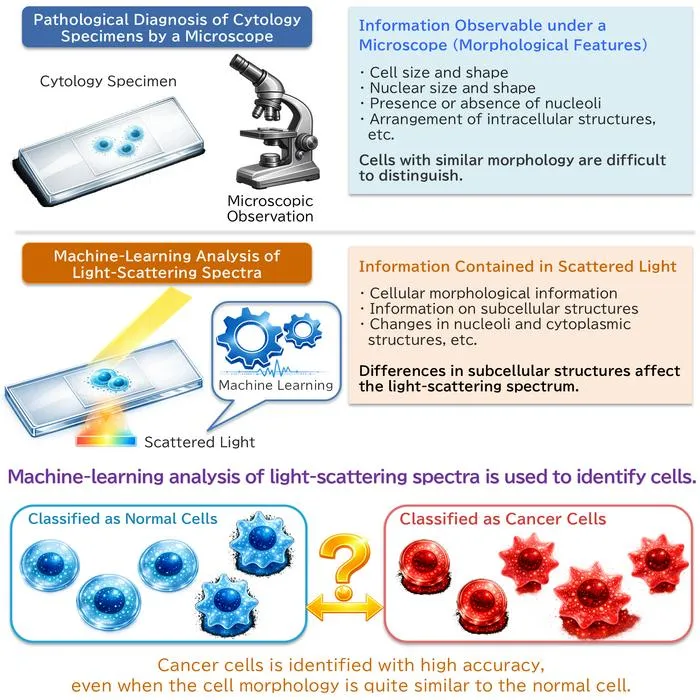
AI System Enhances Cancer Cell Detection via Light Scattering Spectra
Japanese researchers developed an AI system using light scattering spectra to improve cancer cell identification in cytology.
•EurekAlert
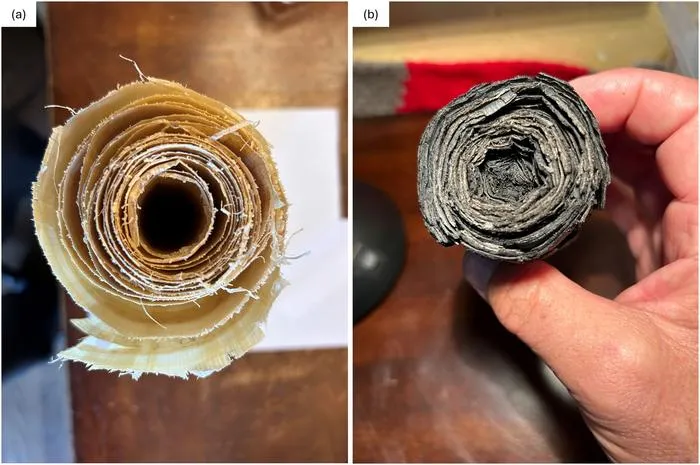
AI and X-ray Imaging Reveal Lost Texts in Ancient Roman Scrolls
AI and x-ray technology enable scientists to virtually read previously unreadable, carbonized Roman scrolls from Herculaneum.

•EurekAlert
AI’s Potential to Expand, Not Shrink, the Clinical Workforce
AI advancements may lead to more, not fewer, healthcare jobs, challenging common fears about workforce reductions in specialties like radiology.