
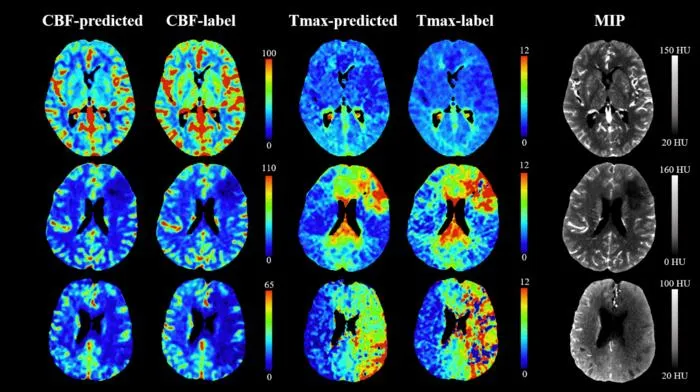
Researchers have developed an AI-enhanced three-phase CT perfusion protocol that reduces radiation exposure by over 80% while accurately generating perfusion maps for stroke evaluation.
Key Details
- 1Traditional CT perfusion (CTP) uses continuous scanning, resulting in high radiation doses (~5260 mGy·cm) and workflow complexity.
- 2The new protocol samples only three phases and uses a GAN-based deep learning model to generate cerebral blood flow (CBF) and Tmax maps.
- 3The approach reduces patient radiation exposure by more than 80% compared to standard CTP methods.
- 4Internal validation demonstrated high fidelity of AI-generated blood flow maps, even with slight deviations in timing of image acquisition.
- 5The method preserves diagnostic accuracy essential for stroke management and is more robust to patient motion.
Why It Matters
The innovation could make stroke diagnosis safer and more accessible, significantly lowering radiation risks while maintaining diagnostic efficacy. Adopting this protocol may benefit vulnerable populations, improve workflow, and expand access to functional brain imaging in acute care.

Source
EurekAlert
Related News
•EurekAlert
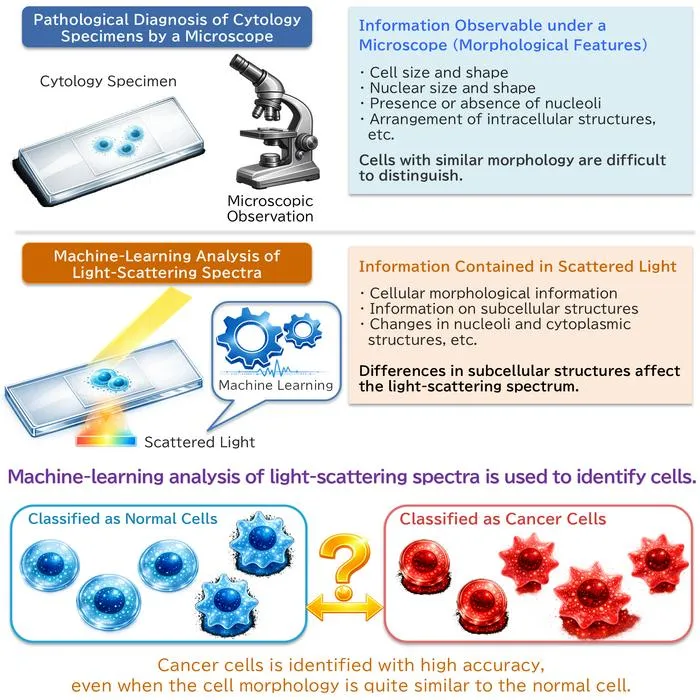
AI System Enhances Cancer Cell Detection via Light Scattering Spectra
Japanese researchers developed an AI system using light scattering spectra to improve cancer cell identification in cytology.
•EurekAlert
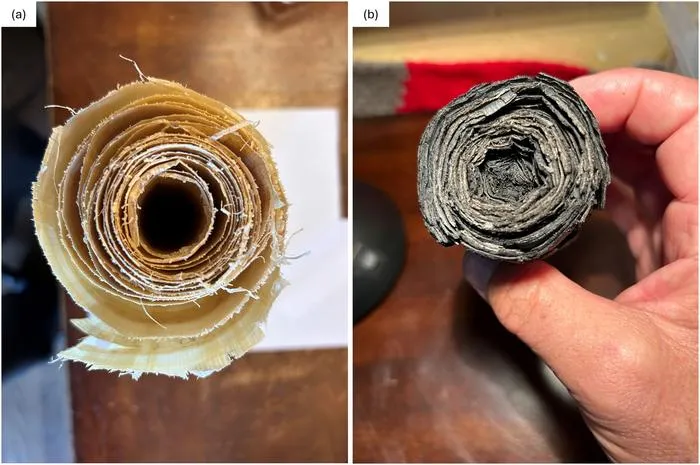
AI and X-ray Imaging Reveal Lost Texts in Ancient Roman Scrolls
AI and x-ray technology enable scientists to virtually read previously unreadable, carbonized Roman scrolls from Herculaneum.

•EurekAlert
AI’s Potential to Expand, Not Shrink, the Clinical Workforce
AI advancements may lead to more, not fewer, healthcare jobs, challenging common fears about workforce reductions in specialties like radiology.