
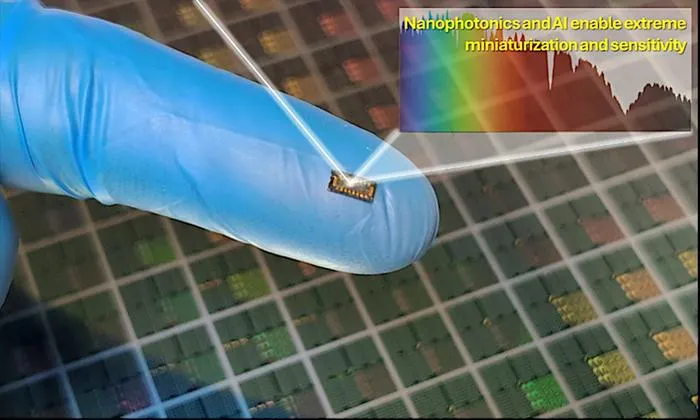
Researchers developed a miniature, AI-powered spectrometer-on-a-chip capable of high-accuracy hyperspectral sensing in the near-infrared range.
Key Details
- 1The chip uses photon-trapping nanostructures on silicon photodiodes to enhance near-infrared detection (640–1100 nm).
- 2A neural network decodes signals from <16 detectors to reconstruct spectra with ~8-nm resolution.
- 3The 0.4-mm chip footprint enables integration into portable or wearable devices.
- 4The device is robust to electronic noise and maintains high accuracy despite its small size.
- 5Demonstrated applications include hyperspectral imaging of a butterfly dataset, showing promise for biomedical and environmental uses.
Why It Matters
Miniaturized, AI-powered spectrometers can bring lab-grade hyperspectral imaging to point-of-care diagnostics, portable medical devices, and new imaging applications previously limited by size and cost. Extending silicon sensor capabilities into the NIR spectrum is especially relevant for medical imaging and tissue analysis.

Source
EurekAlert
Related News
•EurekAlert
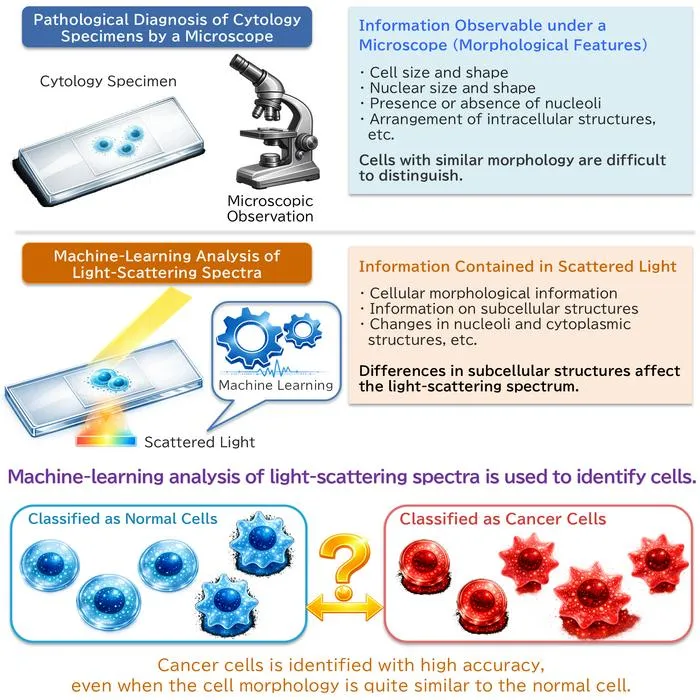
AI System Enhances Cancer Cell Detection via Light Scattering Spectra
Japanese researchers developed an AI system using light scattering spectra to improve cancer cell identification in cytology.
•EurekAlert
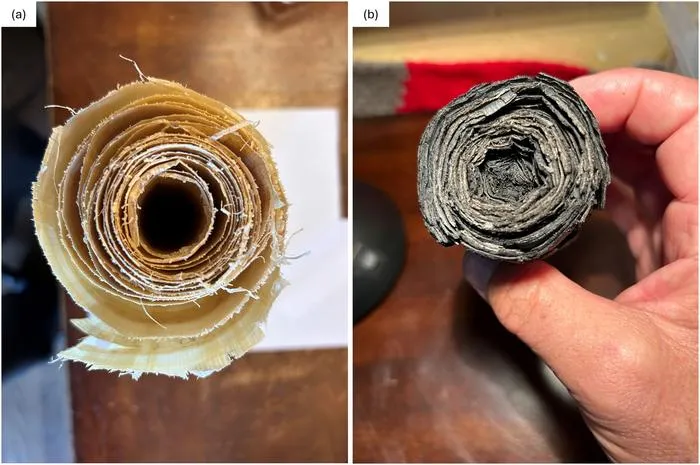
AI and X-ray Imaging Reveal Lost Texts in Ancient Roman Scrolls
AI and x-ray technology enable scientists to virtually read previously unreadable, carbonized Roman scrolls from Herculaneum.

•EurekAlert
AI’s Potential to Expand, Not Shrink, the Clinical Workforce
AI advancements may lead to more, not fewer, healthcare jobs, challenging common fears about workforce reductions in specialties like radiology.