
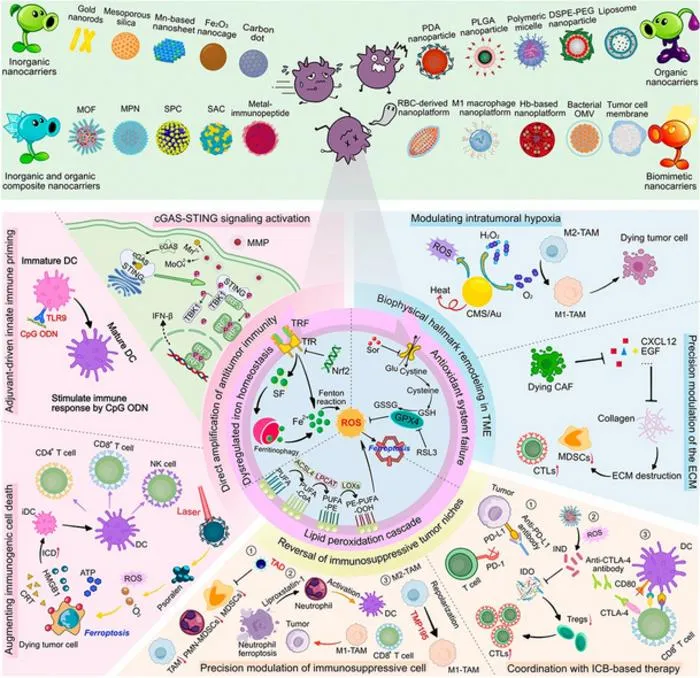
A groundbreaking review highlights how advanced nanoplatforms can synergistically integrate ferroptosis, immunotherapy, and multimodal imaging to optimize cancer therapy.
Key Details
- 1Comprehensive review by Chengdu University researchers details nanoparticle-enabled ferroptosis–immunotherapy strategies for cancer.
- 2Design principles include AI-enabled optimization, rational material selection, and multifunctional integration.
- 3Stimuli-responsive nanocarriers allow tumor-specific delivery and activation of therapeutics.
- 4Integration of imaging modalities (MRI, fluorescence, photoacoustic, ultrasound) enables real-time therapy monitoring.
- 5Clinical translation is supported by FDA-approved drugs and nanomedicines such as mRNA vaccines and TLR agonists.
- 6Identifies challenges and outlines solutions for advancing ferroptosis–immunotherapy nanoplatforms from bench to clinic.
Why It Matters
This work provides a roadmap for engineering multifunctional nanoplatforms that can both treat and monitor cancer in real-time, using imaging to guide therapy and optimize outcomes. Its interdisciplinary approach is critical to accelerating clinical translation of these next-generation therapeutic systems.

Source
EurekAlert
Related News
•EurekAlert
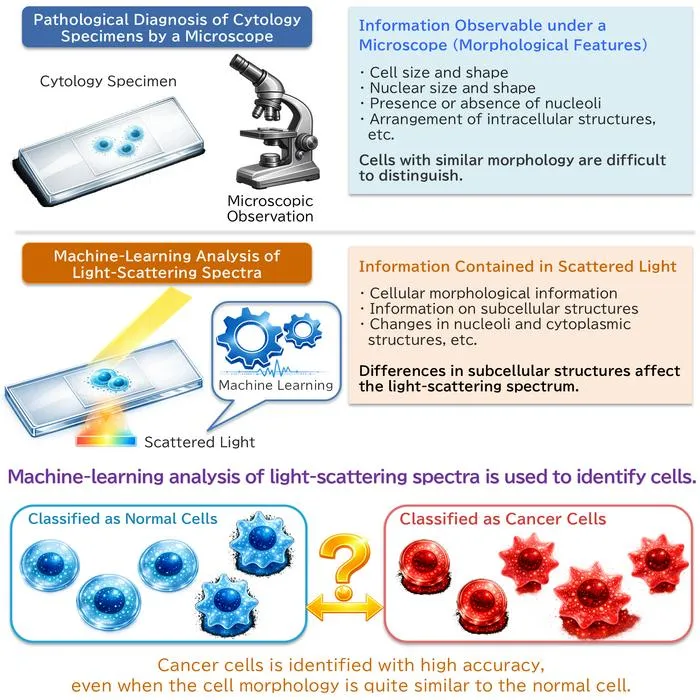
AI System Enhances Cancer Cell Detection via Light Scattering Spectra
Japanese researchers developed an AI system using light scattering spectra to improve cancer cell identification in cytology.
•EurekAlert
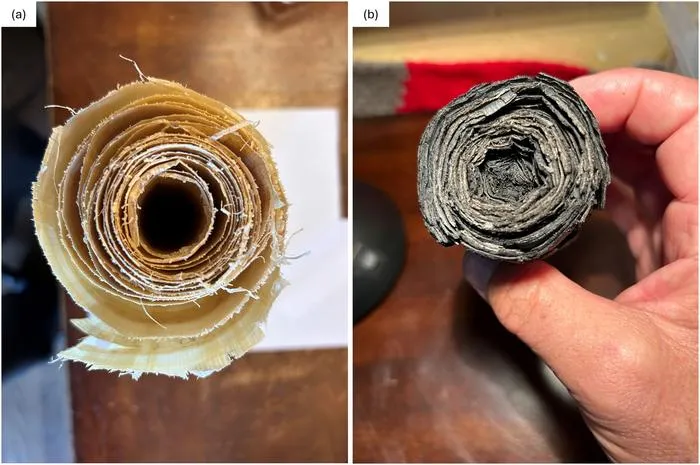
AI and X-ray Imaging Reveal Lost Texts in Ancient Roman Scrolls
AI and x-ray technology enable scientists to virtually read previously unreadable, carbonized Roman scrolls from Herculaneum.
•EurekAlert
AI’s Potential to Expand, Not Shrink, the Clinical Workforce
AI advancements may lead to more, not fewer, healthcare jobs, challenging common fears about workforce reductions in specialties like radiology.