
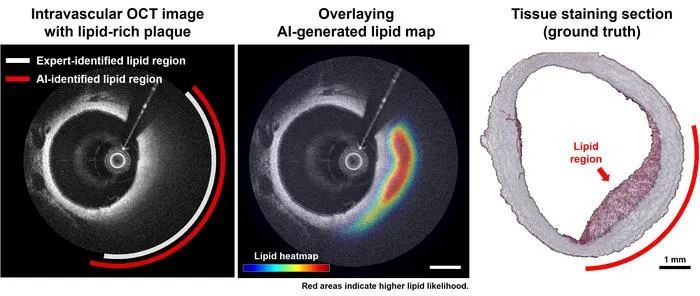
A new AI approach enables OCT to automatically detect lipid-rich plaques in coronary arteries, showing strong agreement with histopathology results.
Key Details
- 1Researchers developed an AI method for detecting fatty deposits in coronary arteries using OCT images.
- 2This method combines spectral data from OCT with deep learning to identify lipid-rich plaques.
- 3The AI approach works with existing clinical OCT systems and does not require extra hardware.
- 4Validation against histopathology in a rabbit model showed strong classification performance.
- 5The technique requires only frame-level annotations, reducing expert labeling time and subjectivity.
- 6Plans are underway for further validation in human coronary artery data and workflow integration.
Why It Matters
Automated lipid plaque detection in OCT can help clinicians better assess cardiac risk without increasing workflow burden, offering more objective and robust support for interventional cardiology. This is a significant advance in imaging AI for cardiovascular applications.

Source
EurekAlert
Related News
•EurekAlert
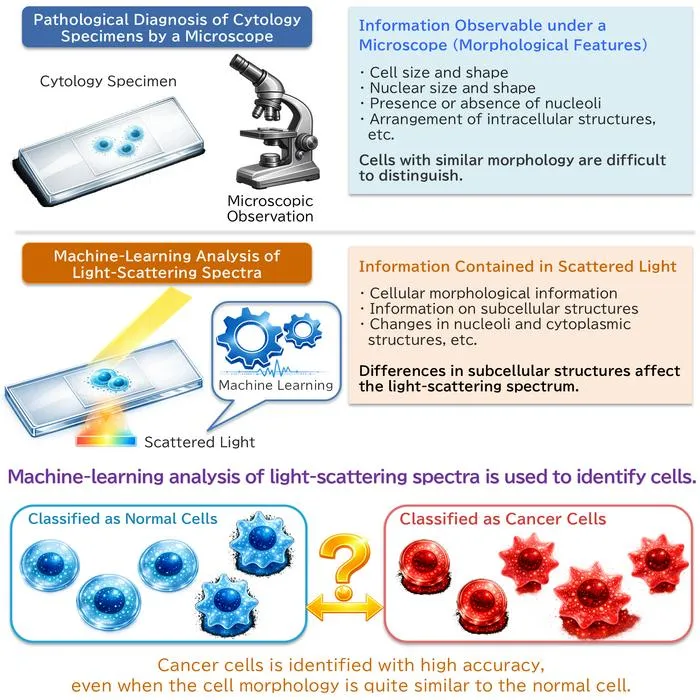
AI System Enhances Cancer Cell Detection via Light Scattering Spectra
Japanese researchers developed an AI system using light scattering spectra to improve cancer cell identification in cytology.
•EurekAlert
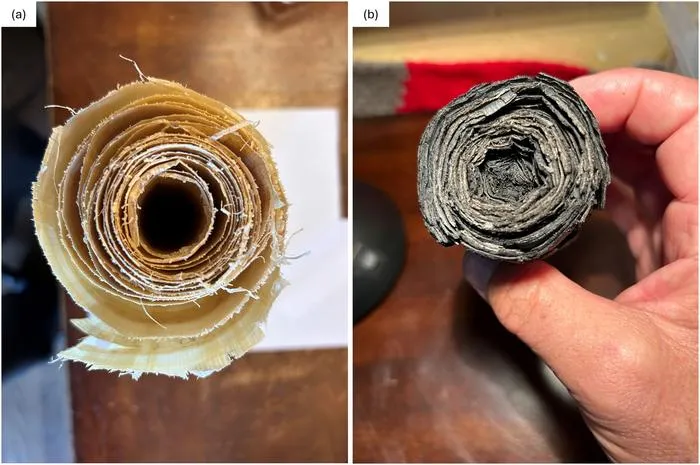
AI and X-ray Imaging Reveal Lost Texts in Ancient Roman Scrolls
AI and x-ray technology enable scientists to virtually read previously unreadable, carbonized Roman scrolls from Herculaneum.
•EurekAlert
AI’s Potential to Expand, Not Shrink, the Clinical Workforce
AI advancements may lead to more, not fewer, healthcare jobs, challenging common fears about workforce reductions in specialties like radiology.