
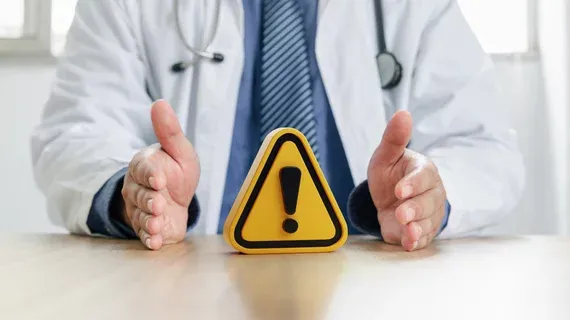
AI-enabled medical devices with limited pre-market validation are more likely to be recalled after FDA clearance.
Key Details
- 1AI-enabled device recalls are more common among those lacking prospective human validation prior to FDA 510(k) clearance.
- 2Most AI medical devices are cleared without requiring prospective clinical testing.
- 3Study reviewed all U.S. recalls of AI-enabled devices between Nov. 15–30, 2024.
- 4Validation method (none, retrospective, or prospective) was a notable factor influencing recall likelihood.
- 5Recalls were categorized into errors such as diagnostic, measurement, and functional issues.
Why It Matters
These findings highlight the inadequacy of current FDA pathways to ensure AI device reliability and safety in clinical environments. For radiology professionals and developers, the results underscore the critical importance of robust validation before market approval.
Source
Health Imaging
Related News

•Radiology Business
Meta Funds Ohio State’s Radiology AI Innovation Projects
Meta will fund Ohio State researchers to explore AI-driven advancements in radiology, including chest X-ray reporting and disease prediction.
•AuntMinnie
AI Triage Tool Speeds Up ICH Head CT Turnaround in ED
AI-based triage for intracranial hemorrhage on head CT reduced emergency department report turnaround by 13 minutes.
•AuntMinnie
ChatGPT-5 Performs Poorly at Detecting Distal Radius Fractures on X-rays
ChatGPT-5 missed about half of distal radius fractures on x-rays, showing limited diagnostic capability in a real-world scenario.