
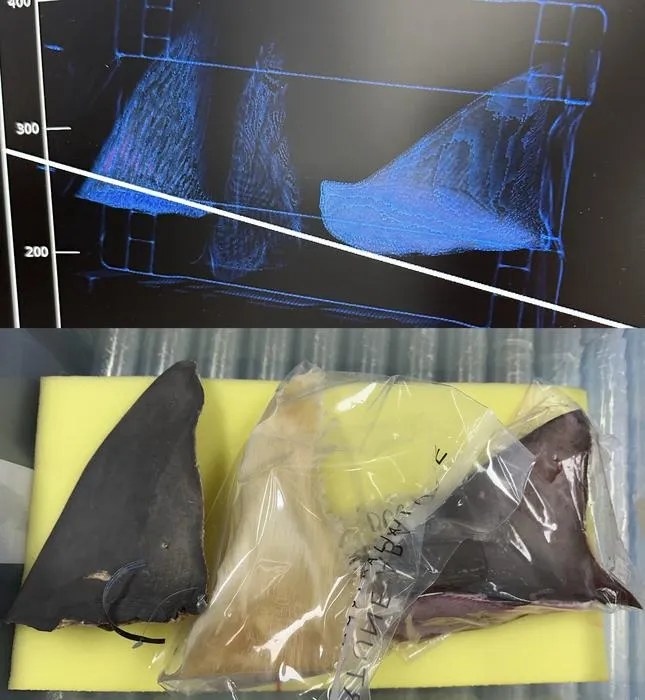
Researchers developed an AI algorithm to identify smuggled marine wildlife in airport luggage using CT scans with high accuracy.
Key Details
- 1Marine wildlife trafficking is valued in the billions annually and threatens ecosystems.
- 2Scientists used airport CT scanners to collect 298 scans of 3 key trafficked items: shark fins, seahorses, and sea cucumbers.
- 3A neural network was trained to detect these items within diverse luggage conditions, including common concealment tricks.
- 4The algorithm achieved 92% overall success: 95% for shark fins, 96% for seahorses, and 86% for sea cucumbers.
- 5False positive rate was 13% (lowest for shark fins at 2%, highest for seahorses at 9%).
- 6Study authors have disclosed employment by the company producing the X-ray system used.
Why It Matters
This research showcases how imaging AI can address non-medical, high-impact challenges by automating illicit wildlife detection in large-scale airport screening. It highlights potential for real-world adoption—and limitations—of AI in operational radiology infrastructure.

Source
EurekAlert
Related News
•EurekAlert
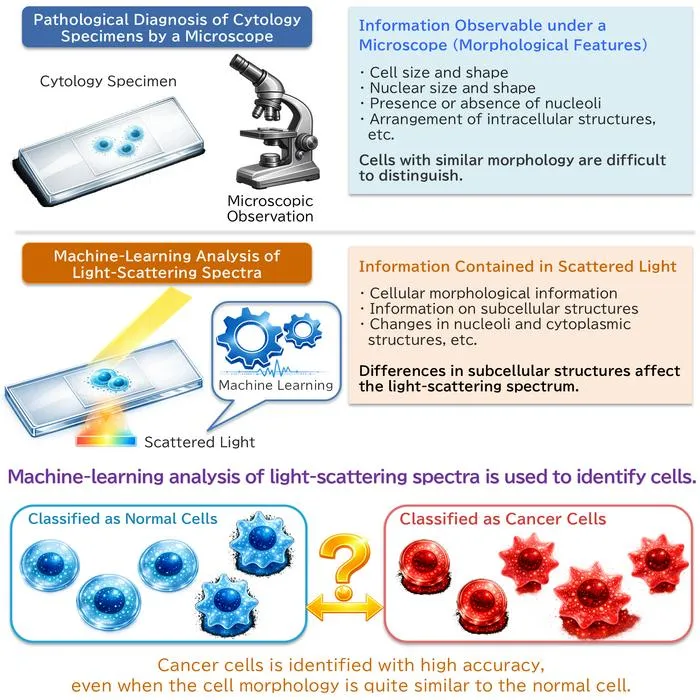
AI System Enhances Cancer Cell Detection via Light Scattering Spectra
Japanese researchers developed an AI system using light scattering spectra to improve cancer cell identification in cytology.
•EurekAlert
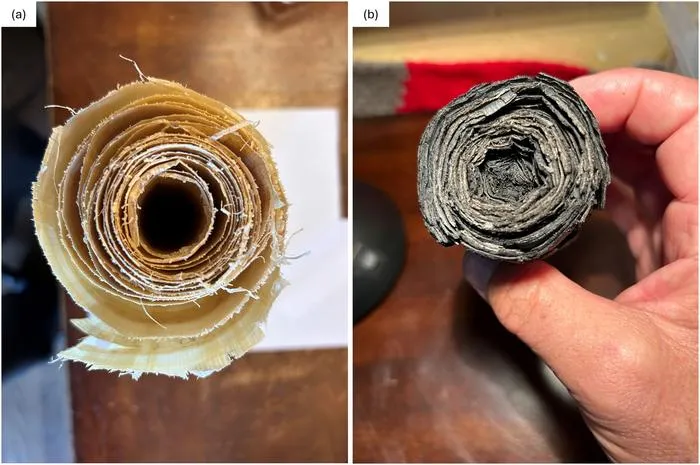
AI and X-ray Imaging Reveal Lost Texts in Ancient Roman Scrolls
AI and x-ray technology enable scientists to virtually read previously unreadable, carbonized Roman scrolls from Herculaneum.

•EurekAlert
AI’s Potential to Expand, Not Shrink, the Clinical Workforce
AI advancements may lead to more, not fewer, healthcare jobs, challenging common fears about workforce reductions in specialties like radiology.