
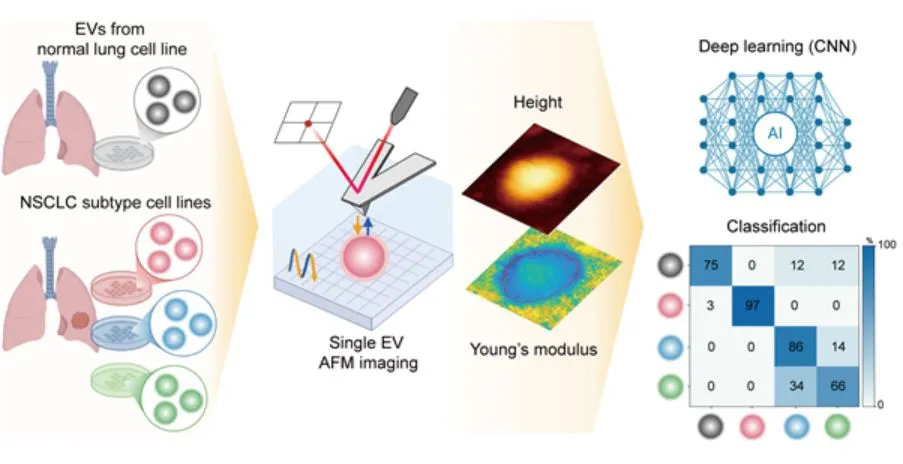
DGIST researchers developed a deep learning model that classifies lung cancer exosomes based on physical properties measured by atomic force microscopy.
Key Details
- 1DGIST team used AFM to measure nanomechanical properties (stiffness, height-to-radius) of exosomes from NSCLC cell lines with different genetic mutations.
- 2AI model (DenseNet-121) classified exosomes by origin, achieving 96% accuracy and AUC of 0.92.
- 3Exosome stiffness reflected KRAS and EGFR mutations in their respective lung cancer cell lines.
- 4The method enables high-precision, label-free, liquid biopsy-based lung cancer diagnosis.
- 5Study published July 8, 2025, in Analytical Chemistry.
Why It Matters
This approach could offer a rapid, non-invasive way to diagnose lung cancer genetic mutations, reducing the need for tissue biopsies. Leveraging AI with nanomechanical imaging pushes boundaries in early cancer detection and personalized medicine.

Source
EurekAlert
Related News
•EurekAlert
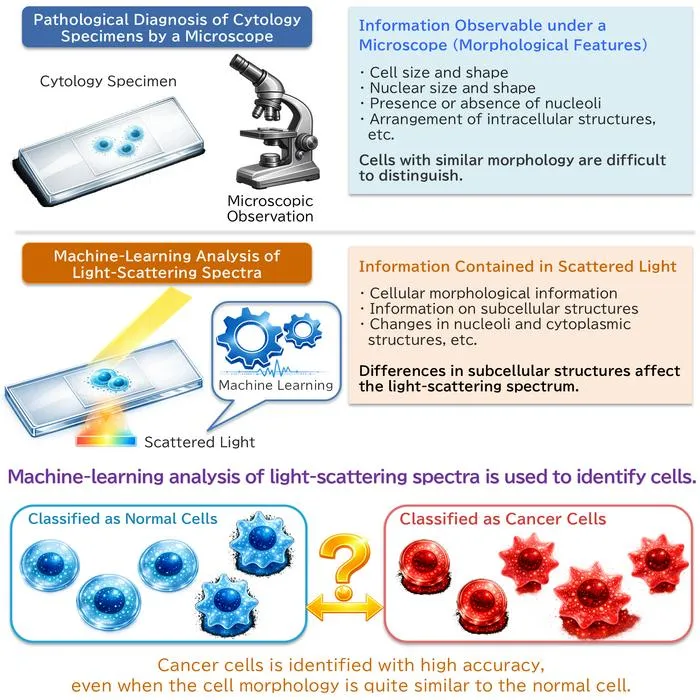
AI System Enhances Cancer Cell Detection via Light Scattering Spectra
Japanese researchers developed an AI system using light scattering spectra to improve cancer cell identification in cytology.
•EurekAlert
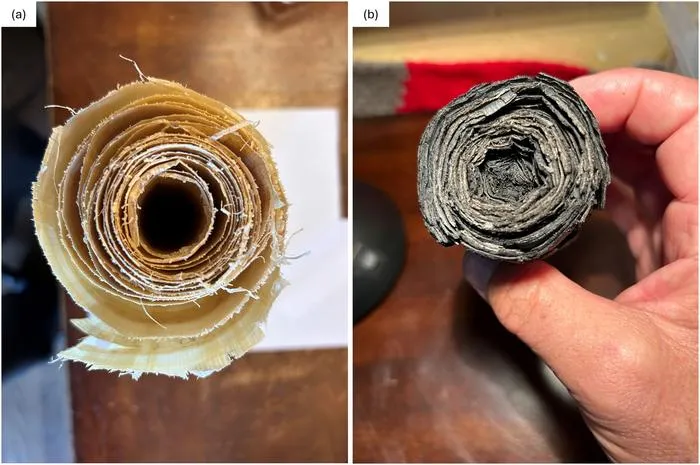
AI and X-ray Imaging Reveal Lost Texts in Ancient Roman Scrolls
AI and x-ray technology enable scientists to virtually read previously unreadable, carbonized Roman scrolls from Herculaneum.

•EurekAlert
AI’s Potential to Expand, Not Shrink, the Clinical Workforce
AI advancements may lead to more, not fewer, healthcare jobs, challenging common fears about workforce reductions in specialties like radiology.