
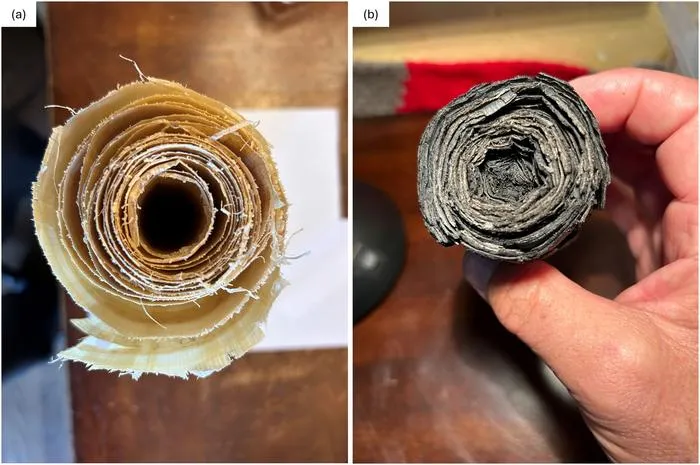
AI and x-ray technology enable scientists to virtually read previously unreadable, carbonized Roman scrolls from Herculaneum.
Key Details
- 1Researchers used x-ray tomography and AI to virtually unroll and read ancient scrolls carbonized by Mt. Vesuvius in 79 CE.
- 2Discovery of lead in some ink enhances the ability of x-rays to distinguish text from papyrus.
- 3Scientists recreated carbonized scrolls with various lead concentrations to test imaging protocols.
- 4X-ray fluorescence and custom software successfully detected and deciphered lead-based writing in experimental scrolls.
- 5The method could improve unrolling algorithms by providing known controls for AI training.
- 6Findings published in PLOS One, September 2026.
Why It Matters
This method demonstrates the potential for advanced imaging and AI to recover lost historical texts, showcasing a novel application of radiology tools. The study bridges heritage science and imaging AI, offering new avenues for both fields.

Source
EurekAlert
Related News
•EurekAlert
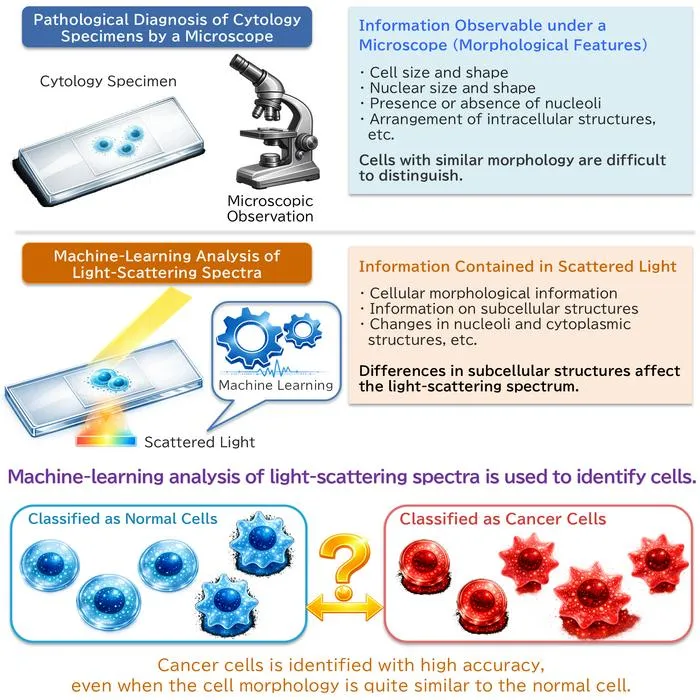
AI System Enhances Cancer Cell Detection via Light Scattering Spectra
Japanese researchers developed an AI system using light scattering spectra to improve cancer cell identification in cytology.
•EurekAlert
AI’s Potential to Expand, Not Shrink, the Clinical Workforce
AI advancements may lead to more, not fewer, healthcare jobs, challenging common fears about workforce reductions in specialties like radiology.
•EurekAlert
NYU AI Model Improves 5-Year Breast Cancer Risk Prediction via 3D Mammograms
NYU researchers developed an AI model using longitudinal 3D mammograms that outperforms single-scan and 2D-based tools in predicting 5-year breast cancer risk.