

Researchers use AI to drastically reduce the analysis time of dynamic stereo X-ray (DSX) images, improving prosthetic limb fitting for veterans.
Key Details
- 1AI research at NJIT aims to process DSX images faster, reducing analysis time from one day to about 15 minutes.
- 2DSX imaging uses internal x-ray views from multiple angles to track barium markers on residual limbs inside prosthetic liners.
- 3About 75% of lower limb amputees suffer skin problems due to imperfect prosthetic fit.
- 4The project is funded by a $40,000 grant from the American Orthopaedic Foot & Ankle Society.
- 5Collaborators include NJIT, Veterans Affairs New York Harbor Healthcare System, and Rutgers New Jersey Medical School.
- 6AI and computer vision are being compared to optimize reliability and usability for clinical settings.
Why It Matters
Efficient AI-powered analysis of DSX can make biomechanical insights actionable in routine clinical care, helping radiologists and clinicians deliver better outcomes for amputees. This work highlights the expanding use of imaging AI beyond diagnostics into real-world device evaluation and rehabilitation.

Source
EurekAlert
Related News

•EurekAlert
AI System Enhances Cancer Cell Detection via Light Scattering Spectra
Japanese researchers developed an AI system using light scattering spectra to improve cancer cell identification in cytology.
•EurekAlert
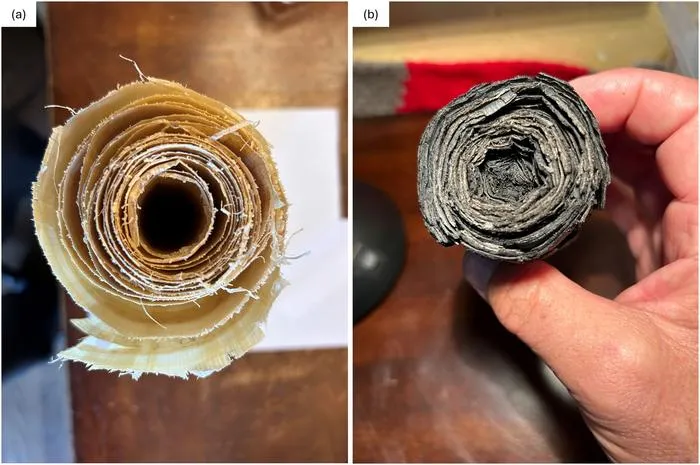
AI and X-ray Imaging Reveal Lost Texts in Ancient Roman Scrolls
AI and x-ray technology enable scientists to virtually read previously unreadable, carbonized Roman scrolls from Herculaneum.

•EurekAlert
AI’s Potential to Expand, Not Shrink, the Clinical Workforce
AI advancements may lead to more, not fewer, healthcare jobs, challenging common fears about workforce reductions in specialties like radiology.