
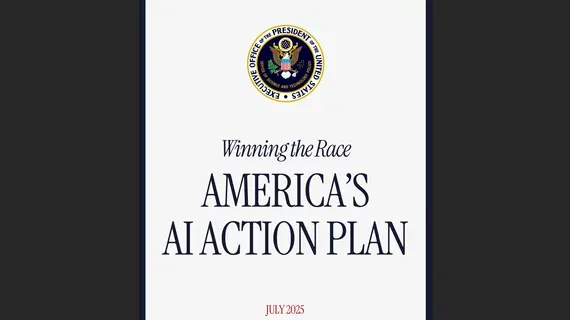
The White House AI Action Plan, evolving GenAI monetization models, and AI governance challenges shape current healthcare AI debates.
Key Details
- 1The Trump administration's AI Action Plan is designed to encourage AI development in healthcare, balancing oversight with reduced regulation.
- 2Debate continues over whether the plan prioritizes innovation or sidelines critical protections put in place by previous administration.
- 3Stakeholders are examining AI governance and state law compliance in anticipation of changes from the Action Plan.
- 4Two models for GenAI monetization in healthcare are highlighted: industry-led FDA-approved products and clinician-driven educational tools.
- 5IBM's new report highlights severe gaps in AI governance: 97% of breached organizations had no AI access controls, and healthcare breaches had the highest costs (avg $7.42M loss, 279 days to resolve).
- 6Recent AI imaging news includes UnitedHealthcare coverage for an imaging AI vendor valued at $1.3B and an AI risk assessment tool receiving FDA Breakthrough Device designation.
Why It Matters
Policymakers, clinicians, and industry leaders in radiology and healthcare AI must navigate shifting federal guidance, competing monetization models, and persistent security weaknesses. These dynamics will impact the pace, direction, and safety of clinical AI adoption.

Source
AI in Healthcare
Related News

•AuntMinnie
Vast Majority of FDA-Cleared Radiology AI Devices Lack Outcome Trials
Only 0.3% of FDA-cleared radiology AI devices have registered trials on patient outcomes, raising concerns about evidence standards.
•Radiology Business
Radiology Partners Urges FDA for Clarity on Imaging AI Regulations
Radiology Partners and Mosaic Clinical Technologies petition the FDA for clearer regulatory guidelines on imaging AI vision-language models.
•Radiology Business
FDA Solicits Public Input on Regulating Generative AI in Medical Devices
The FDA is seeking public feedback on how to regulate generative AI in medical devices, recognizing both its promise and risks.